Brick Repointing Cost: What You’ll Pay to Repair Mortar Joints
Mortar is the glue that holds a brick wall together, and it doesn’t last forever. Over decades of freeze-thaw cycles, rain, and sun, the joints between bricks crack, crumble, and wash away. When that happens, the fix is repointing — cutting out the damaged mortar and repacking the joints with fresh material — and the first question most homeowners ask is the brick repointing cost.
The short answer: expect to pay between $3 and $12 per square foot of wall, or roughly $500 to $2,500 for a typical chimney or a modest section of exterior brick. Harder-access jobs, delicate historic brick, and taller walls push that number much higher, as we’ll get into below.
Repointing is not a cosmetic touch-up. It’s a structural repair that stops water from getting behind your brick and turning a small joint problem into spalling, rot, and mold. Here’s what the work actually costs, what moves the price, and whether you should reach for a tuck-pointing trowel yourself.
What Is Brick Repointing?
Repointing is the process of removing the damaged outer layer of mortar from a brick joint — usually to a depth of about three-quarters of an inch — and filling it back in with fresh mortar. The old mortar is raked or ground out first; then new mortar is pressed in, tooled to match the existing joint profile, and allowed to cure.
The goal is a watertight, stable joint that matches the look of the original wall. A skilled mason matches not just the color but the strength of the old mortar, which matters more than most people realize. Fresh mortar that’s harder than the surrounding brick traps moisture in the masonry and can cause the brick faces to pop off over time — a failure called spalling.
Done correctly, repointing extends the life of a brick wall by decades. Skipped, the wall keeps absorbing water, joints keep eroding, and eventually individual bricks loosen and the wall itself starts to fail.
How Much Does Brick Repointing Cost?
Most professionals quote repointing by the square foot. Here are the working numbers you’ll see across the industry.
- Per square foot: $3 to $12 is the common range for straightforward wall access. Ground-level walls on newer construction sit at the low end; older homes with irregular joints and lime mortar land at the top.
- Chimney: $700 to $1,800 is typical for a full repoint of a standard residential chimney, including the time spent working from a ladder or scaffolding at height.
- Small patch (under 100 square feet): $300 to $1,200 for localized damage, such as a single eroded section above grade or around a window sill.
- Full exterior wall: $2,000 to $8,000 or more, depending on wall area, height, and how much scaffolding the crew has to erect.
- Tuckpointing (premium finish): $8 to $15 per square foot for the extra-labor technique that adds a thin contrasting line for a crisp, historic look.
This Old House puts the broader range at $3 to $20 per square foot, with price shifting heavily on access and brick condition. If you’re weighing the budget against other repairs around the house, it helps to see repointing as waterproofing first and appearance second.
| Job Type | Typical Cost Range | What’s Included |
|---|---|---|
| Small wall patch (under 100 sq ft) | $300–$1,200 | Grind or rake out joints, repoint, clean up |
| Standard chimney repoint | $700–$1,800 | Full joint repair at height, plus basic flashing check |
| Full exterior wall | $2,000–$8,000+ | Scaffolding, multiple days of labor, full cleanup |
| Tuckpointing finish | $8–$15 per sq ft | Repointing plus a fine contrasting center line |
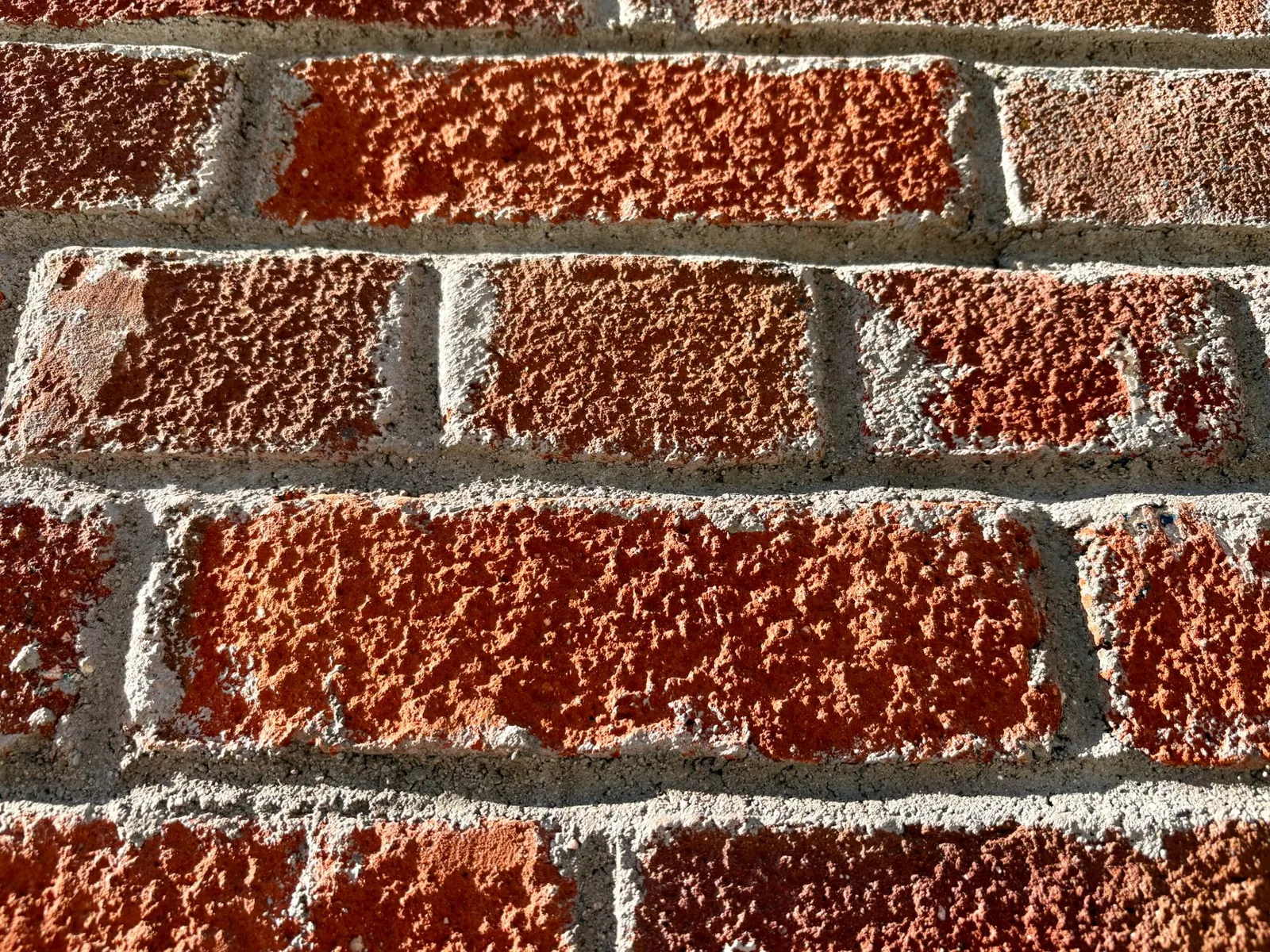
Photo by James Huff via Pexels
What Drives the Price?
Seven factors move a brick repointing quote up or down, and understanding them will help you read any estimate you receive.
- Height and access. A single-story wall reachable from the ground costs far less than a chimney or upper facade that needs scaffolding or a lift. Scaffolding rental alone often adds $500 to $1,500 to a job.
- How much joint is damaged. Repointing 20 feet of eroded joint costs less per hour than doing the same wall when every joint needs work, but the square footage is what scales the total.
- Mortar type. Pre-1930s homes usually have soft lime mortar that costs more to source and match than modern cement-based mixes. Historic-matched lime can run several times the price of standard mortar.
- Brick condition. If the bricks themselves are spalling or cracked, expect to pay for replacements on top of repointing — from $15 to $40 per brick installed, depending on matching difficulty.
- Joint depth and profile. Raked, recessed, or shaped joints take longer to tool than flush ones, which adds labor hours.
- Labor rates in your area. Urban markets and coastal metro areas charge noticeably more than rural regions for skilled masonry work.
- Equipment and disposal. Grinding out old mortar produces silica dust and debris that must be contained and hauled, which is built into most professional quotes.
Repointing vs. Tuckpointing: What’s the Difference?
These two terms get tangled in conversation, but they aren’t the same job. Repointing is the general repair: cut out the bad mortar and replace it, full stop. Tuckpointing is a specific cosmetic technique invented in 18th-century England, where a mason repoints the joint flush, then cuts a thin groove and fills it with a contrasting lime “line” to make the brickwork look crisper and more uniform.
Practically, every tuckpointing job includes repointing, but not every repointing job is tuckpointing. That’s exactly why tuckpointing costs more — Bob Vila’s tuckpointing cost guide puts the average around $1,500, with a common range of $500 to $2,500, and the extra labor for those fine lines is the reason.
For most homeowners, standard repointing is the smart call. Reserve true tuckpointing for historic facades, century homes, or any wall where you want the joints to deliberately stand out as a feature.
Photo by Magda Ehlers via Pexels
DIY Repointing vs. Hiring a Pro
Repointing is one of those masonry jobs that looks approachable and can genuinely be done by a careful homeowner on the right project — but it can also go wrong in expensive ways.
When DIY makes sense:
- The damage is at ground level and reachable without a ladder.
- It’s a small patch, not an entire wall or chimney.
- The house is newer and uses standard cement-based mortar.
- You own or can rent an angle grinder with a masonry blade, a joint raker, a tuck-pointing trowel, and a mortar hawk.
When you should hire a pro:
- The work is at height (any chimney qualifies).
- The home is historic and needs a lime-mortar match.
- Joints are deep, and the wall shows signs of movement or loose bricks.
- You’d be working on a load-bearing wall or a structural repair.
The DIY materials for a small patch — mortar, tools, and safety gear including a respirator and safety glasses — usually run $75 to $150, which is why This Old House’s hand-tool repointing project comes in around $75 for a few hours of work. The hidden cost is failure: mixing mortar too hard for the adjacent brick is the single most common amateur mistake, and it leads to spalling that costs far more than a pro’s original quote to fix.
Signs Your Brick Exterior Needs Repointing
Catch the damage early and repointing stays cheap. Here’s what to look for.
- Eroded or recessed joints — mortar that sits noticeably lower than the brick face, or that crumbles when you run a key along it.
- Cracked or missing mortar — visible gaps, especially at corners, around windows, and along the roofline.
- Loose bricks — any brick that moves when pressed is a red flag, not a cosmetic issue.
- White staining (efflorescence) — salt deposits that signal water is already moving through the wall.
- Damp patches or musty smells inside — the indoor symptom of a wall that has stopped shedding water at the surface.
If water is already getting inside, repointing is only one piece of the fix. Pair it with proper exterior caulking around openings and, for below-grade moisture, a serious look at waterproofing a basement exterior to close every entry point. Left unaddressed, the same trapped moisture that eats mortar will also feed wood rot in trim, sills, and framing.
Frequently Asked Questions
How much does brick repointing cost per square foot?
Most homeowners pay $3 to $12 per square foot for standard repointing, with tuckpointing ranging higher at $8 to $15 per square foot. Historic homes with lime mortar and poor access sit at the top of those ranges.
Is repointing the same as tuckpointing?
No. Repointing is the general repair of damaged mortar joints. Tuckpointing is a more expensive cosmetic technique that adds a thin contrasting center line for a crisp, uniform look, and it always includes repointing.
How long does repointing last?
Properly repointed mortar typically lasts 20 to 30 years, and often far longer on a sheltered wall. The lifespan depends on mortar compatibility, exposure, and how well the home sheds water at the roofline and foundation.
Can I repoint brick myself?
Yes, on small ground-level patches of newer construction. At-height work, historic lime mortar, and structural repairs are best left to a mason — the cost of fixing amateur mistakes usually exceeds the cost of hiring a pro in the first place.
Does repointing stop water leaks?
Repointing restores the wall’s outer water barrier and stops a major source of penetrating damp, but it won’t fix below-grade leaks, foundation cracks, or failed flashing. Those need their own repairs alongside the repointing.
The Bottom Line
Brick repointing cost lands between $3 and $12 per square foot for most homes, or $500 to $2,500 for the typical chimney or wall section. It’s one of the highest-value exterior repairs you can make: the job is relatively inexpensive next to the damage it prevents, and fresh mortar buys your wall two or three more decades.
Before you schedule, get at least three itemized quotes that spell out access, mortar type, and whether brick replacement is included. And while you’re tending to the exterior, don’t skip the basics — a thorough pressure wash once or twice a year clears the mildew and grit that slowly degrade mortar, and knowing how to pressure wash a house safely keeps that cleaning from doing more harm than good.
A wall that’s repointed today won’t need the work again in your lifetime. That’s about as close to a permanent fix as exterior maintenance gets.