How to Pressure Wash a House: A Step-by-Step Guide
Learning how to pressure wash a house is the single most cost-effective way to refresh a grimy exterior, remove the algae and mildew that slowly eat into wood and paint, and prep the surface before you caulk or repaint. A professional soft wash or pressure wash typically runs $250 to $600 for a 2,000-square-foot home, while renting a machine and doing it yourself runs $40 to $100 for the day. Done right, the job takes a lazy Saturday; done wrong, it can gouge cedar, shatter vinyl laps, and force water behind the siding where it rots the framing.
The real trick is not horsepower. It is matching the pressure to the surface, using the right detergent, and following a disciplined top-to-bottom sequence. Here is exactly how to pressure wash a house without the damage that DIYers cause when they crank the machine to maximum and start blasting everything in sight.
How to Pressure Wash a House Without Damaging Your Siding
Nearly all pressure-washing damage traces back to three mistakes: too much pressure, a nozzle held too close, or spraying at the wrong angle. Vinyl siding is the most common casualty, because it is easy to shoot water up and behind the laps, where it gets trapped against the sheathing and feeds mold and rot for years.
A few ground rules keep the job safe:
- Keep the nozzle at least 12 inches from the surface, and move in closer only if a test spot proves it cleans without etching.
- Spray down and across the siding, never up into laps, soffit vents, or the underside of clapboards.
- Use a 25- or 40-degree fan tip, not the red 0-degree tip, which acts like a scalpel on soft material.
- Start at the lowest effective pressure with detergent doing the work, then escalate only where grime remains.
Before you commit to a full wall, test an inconspicuous area behind a bush or under a deck. If the test spot etches, fuzzes the wood, or lifts paint, drop the PSI and widen the fan.
Choose the Right Pressure Washer and PSI
Pressure washers fall into three rough classes: electric units (1,300–2,000 PSI), gas homeowner units (2,500–3,200 PSI), and professional gas units (3,000 to 4,000-plus PSI). For most house exteriors, the sweet spot is 1,500–2,800 PSI paired with 2.0–3.0 GPM of flow. Flow rate matters more than PSI when it comes to rinsing speed; a 2.5 GPM machine washes loosened soap and grime off the wall far faster than a 1.2 GPM electric unit, which is why whole-house jobs drag on electric machines.
| Feature | Electric (1,500–2,000 PSI) | Gas Homeowner (2,500–3,200 PSI) | Professional Gas (3,500+ PSI) |
|---|---|---|---|
| Best for | Light grime, vinyl, annual upkeep | Most siding types, two-story homes | Heavy mildew, brick, paint prep |
| Flow (GPM) | 1.2–1.8 | 2.3–2.5 | 3.0+ |
| Cost to buy | $80–$250 | $250–$500 | $900–$2,000 |
| Rental cost per day | $35–$60 | $40–$100 | $80–$150 |
| Damage risk | Low | Moderate | High without experience |
As This Old House notes, most house cleaning calls for under 2,000 PSI. For vinyl and painted wood, 1,300–1,600 PSI with a wide fan is plenty. For brick, stone, and stucco you can push toward 2,000–3,000 PSI, but never use a turbo nozzle on mortar joints, or you will blast the pointing right out from between the bricks.

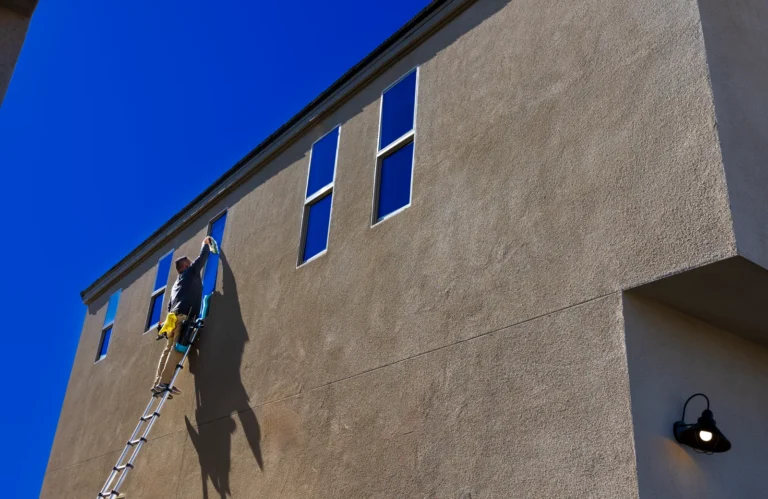
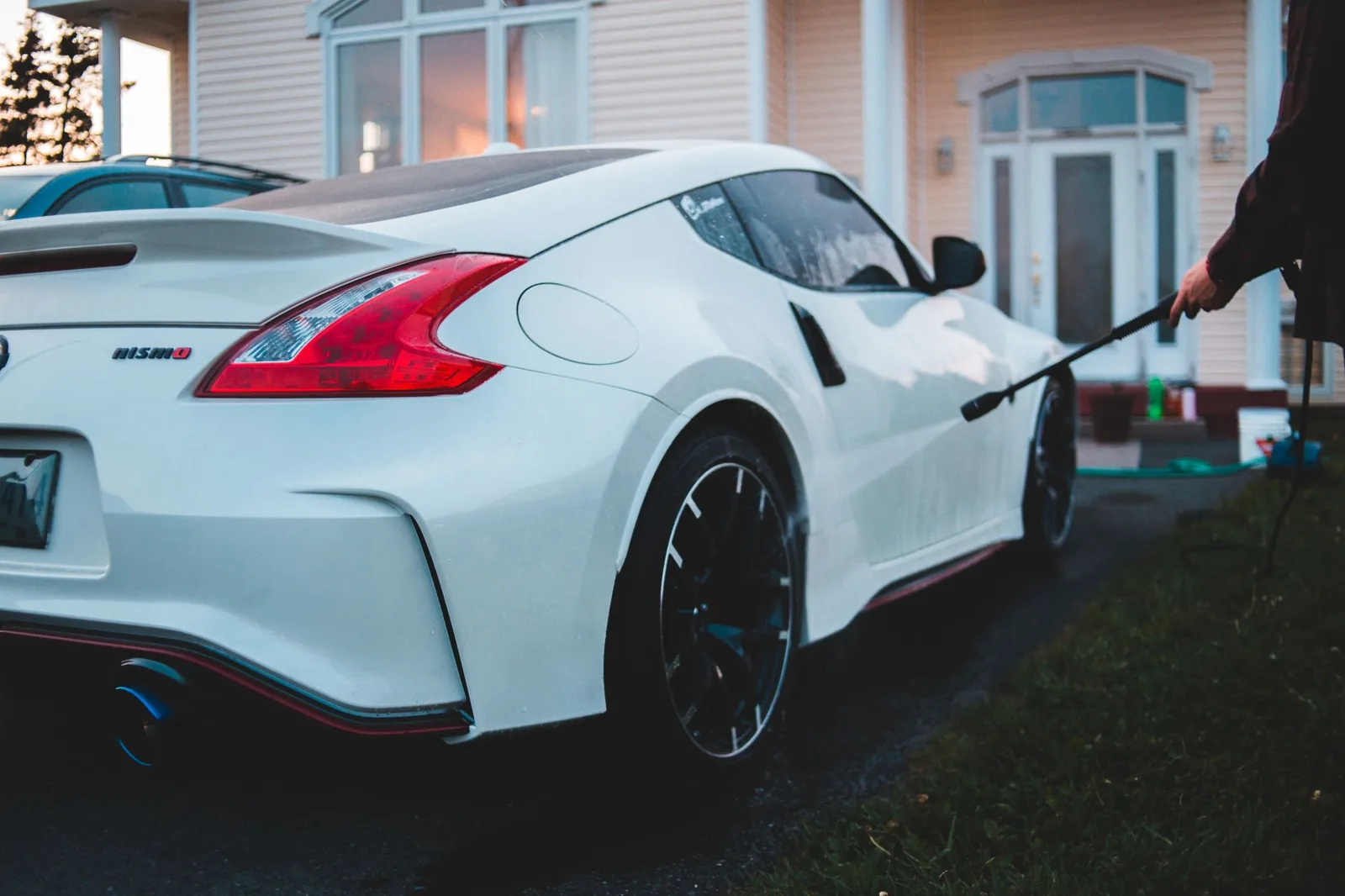
Photo by Erik Mclean via Pexels
Assemble Your Supplies and Prepare the Exterior
Stage everything before you pull the trigger, so you are not scrambling on a ladder with a running machine in one hand. The core kit includes:
- A pressure washer with a 25-degree tip, a 40-degree tip, and a low-pressure soap tip
- A house-wash detergent or siding cleaner (Simple Green House & Siding or a dedicated sodium-hypochlorite house wash both work well)
- A downstream injector, which dilutes detergent after the pump so bleach never runs through it
- An extension wand or telescoping lance for second-story walls and soffits
- A sturdy ladder, non-slip shoes, and safety glasses
- A garden hose long enough to reach every wall
- Drop cloths or plastic sheeting for outlets, exterior lights, and sensitive plants
Preparation is where most of the “pressure washing ruined my garden” stories start. Close all windows and doors first. Cover exterior outlets and light fixtures with plastic and painter’s tape. Then protect the landscaping, because most house-wash detergents are bleach-based and will brown grass and ornamentals if they sit; wet the plants down before you start and rinse them thoroughly when you are done. Finally, move or cover patio furniture, grills, and anything that should not get soaked in soap.
A Step-by-Step Process for Washing the House
Work in sections and always go top to bottom, so dirty rinse water flows down over already-cleaned surface rather than re-soiling the wall below it.
- Apply detergent. Use the low-pressure soap tip with the downstream injector and coat one wall from the top down, working in roughly 10-foot sections.
- Let it dwell. Give the detergent 5 to 10 minutes to break down grime and kill algae and mildew. Do not let it dry on the siding; re-wet it if it starts to.
- Rinse top-down. Switch to a rinse tip and keep the wand moving in steady, overlapping strokes, holding a consistent 12 to 18 inches off the surface.
- Go light around openings. Rinse windows, doors, and trim with a soft pass; they do not need a focused blast, and a hard spray can break seals and force water inside.
- Move to the next wall. Repeat detergent, dwell, and rinse, keeping each section small enough that the soap never dries before you rinse it off.
- Finish with soffits and gutters. Do these last, from the ground with the telescoping wand wherever possible, so ladder work stays minimal.
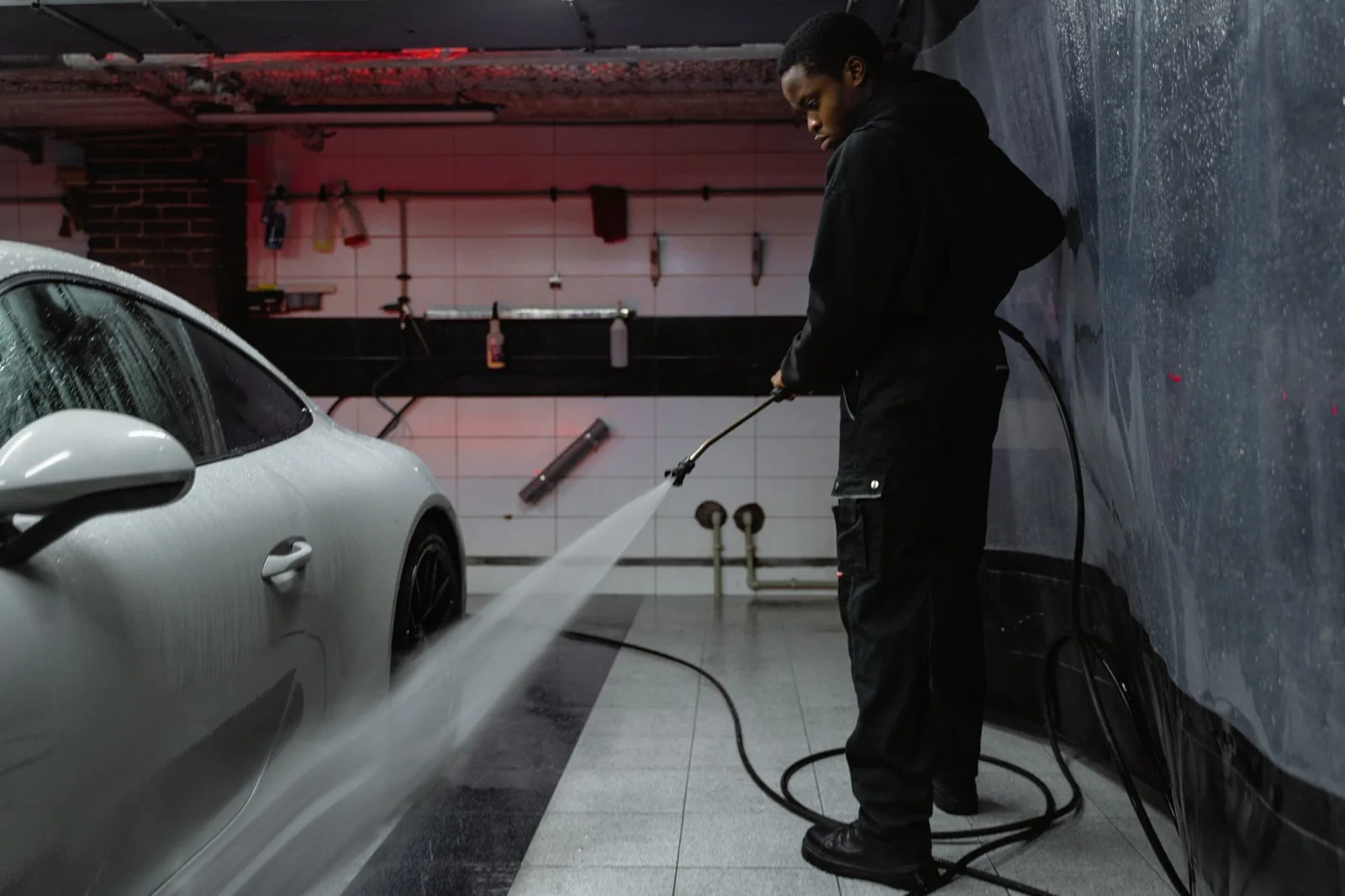
Photo by Tima Miroshnichenko via Pexels
Pressure Washing by Siding Type
Every material has a pressure ceiling, and staying under it is the whole game.
Vinyl siding
Keep it at 1,300–1,600 PSI with a wide fan, hold the wand angled slightly downward, and never spray up into the laps. Vinyl is forgiving of low pressure but traps water easily, so let the detergent lift the grime instead of the stream doing it.
Wood siding and clapboard
Cedar and pine are soft-wash-only surfaces. Use 800–1,200 PSI, a 40-degree tip, and keep the wand moving constantly. If the paint is already peeling or the wood is soft and punky, pressure washing will make the damage worse, not better; repair the rot first, then clean.
Brick, stone, and stucco
These handle 2,000–3,000 PSI comfortably, but use a wide fan and skip turbo tips near mortar and stucco, which absorbs water like a sponge. Seal any cracks before you wash so water does not get driven into the wall.
Fiber cement (James Hardie and similar)
Run 1,500–2,000 PSI per the manufacturer’s guidance, keep the wand 12 inches or more from the surface, and never angle up into the bottom edge of a course.
Whatever the material, the Family Handyman’s pressure-washer guidance is consistent on one point: more pressure is almost never the answer when a detergent soak and a wide rinse will do the job.
Common Mistakes That Damage Siding
- Reaching for the red 0-degree tip, which gouges every siding type.
- Spraying upward into vinyl laps and soffit vents and trapping water in the wall.
- Holding the nozzle an inch from the surface to “get the stain out,” which etches and fuzzes instead.
- Letting bleach-based detergent drip onto asphalt shingles or sit on plants.
- Pressure washing a house with peeling paint or rotting wood, which accelerates the very damage you are trying to hide.
If you are washing specifically to prep for repaint, resist the urge to strip old paint with raw pressure. Scrape, sand, and clean instead, then caulk gaps around windows, doors, and trim before the paint goes on. Once the siding is clean and dry, walk the perimeter and recaulk any gaps you find—it is cheap insurance against the water damage that pressure washing can expose.
Frequently Asked Questions
How much PSI do I need to pressure wash a house?
About 1,300–1,600 PSI for vinyl and painted wood, and up to 3,000 PSI for brick, concrete, and stucco. Flow rate matters too, and a 2.3–2.5 GPM machine is the practical minimum for an entire house.
Can I pressure wash a house with plain water, or do I need detergent?
You can rinse loosened dust with water alone, but detergent is what removes mildew, algae, and the gray “weathered” film. A bleach-based house wash applied through a downstream injector kills the growth so it stays away longer.
How often should I pressure wash my house?
Most homes do well every 12 to 24 months, or whenever you notice green algae blooming on the north and shaded walls. Homes under tree cover or in humid climates often need it annually.
Is it safe to pressure wash vinyl siding?
Yes, at low pressure with a wide fan and a downward spray angle. The damage happens when high-pressure water is forced up and behind the laps, so keep it under roughly 1,600 PSI and never angle upward.
How much does it cost to have a house pressure washed?
Most pros charge $250 to $600 for a 2,000-square-foot home, or around $0.10–$0.80 per square foot depending on height, material, and how much mildew is present. See our pressure washing cost breakdown for what drives the price.
The Bottom Line
Pressure washing is one of the highest-value exterior maintenance jobs a homeowner can do. It protects paint and siding, prevents rot and algae, and adds instant curb appeal for the cost of a weekend and a tank of gas. Nail the fundamentals—1,500–2,800 PSI, a wide fan tip, detergent applied downstream, and a strict top-to-bottom, down-not-up sequence—and you will get a clean house instead of a damaged one. If you would rather skip the ladder and the risk, hire a pro for a few hundred dollars and compare quotes, since pricing swings widely by region and material. Either way, once the exterior is clean, keep the envelope sealed with fresh caulk and weatherstripping, and the finish will last for years.