Mulch vs. Rock Landscaping: Which Ground Cover Is Right for Your Yard?
When you finish a flower bed, line a walkway, or cover the dirt around new shrubs, the same question comes up every time: mulch vs rock landscaping — which one is actually the smarter choice? Both make a yard look finished, both cut down on weeds, and both have loyal fans. But they behave very differently over time, and the material that looks cheapest on the shelf is rarely the one that costs least five years down the road.
The short answer is that neither ground cover wins in every yard. Organic mulch feeds the soil as it breaks down, but you have to keep adding it. Landscape rock lasts for decades, but it heats up in the sun, does nothing for your soil, and is a genuine headache to remove if you change your mind. Cost, climate, what you’re planting, and how much upkeep you actually want to do all steer the decision.
Below we break down the real numbers — what each option costs per square foot, the maintenance each one demands, how they affect your plants, and where each makes the most sense — so you can choose with confidence instead of guessing at the garden center.
What’s the Difference Between Mulch and Rock?
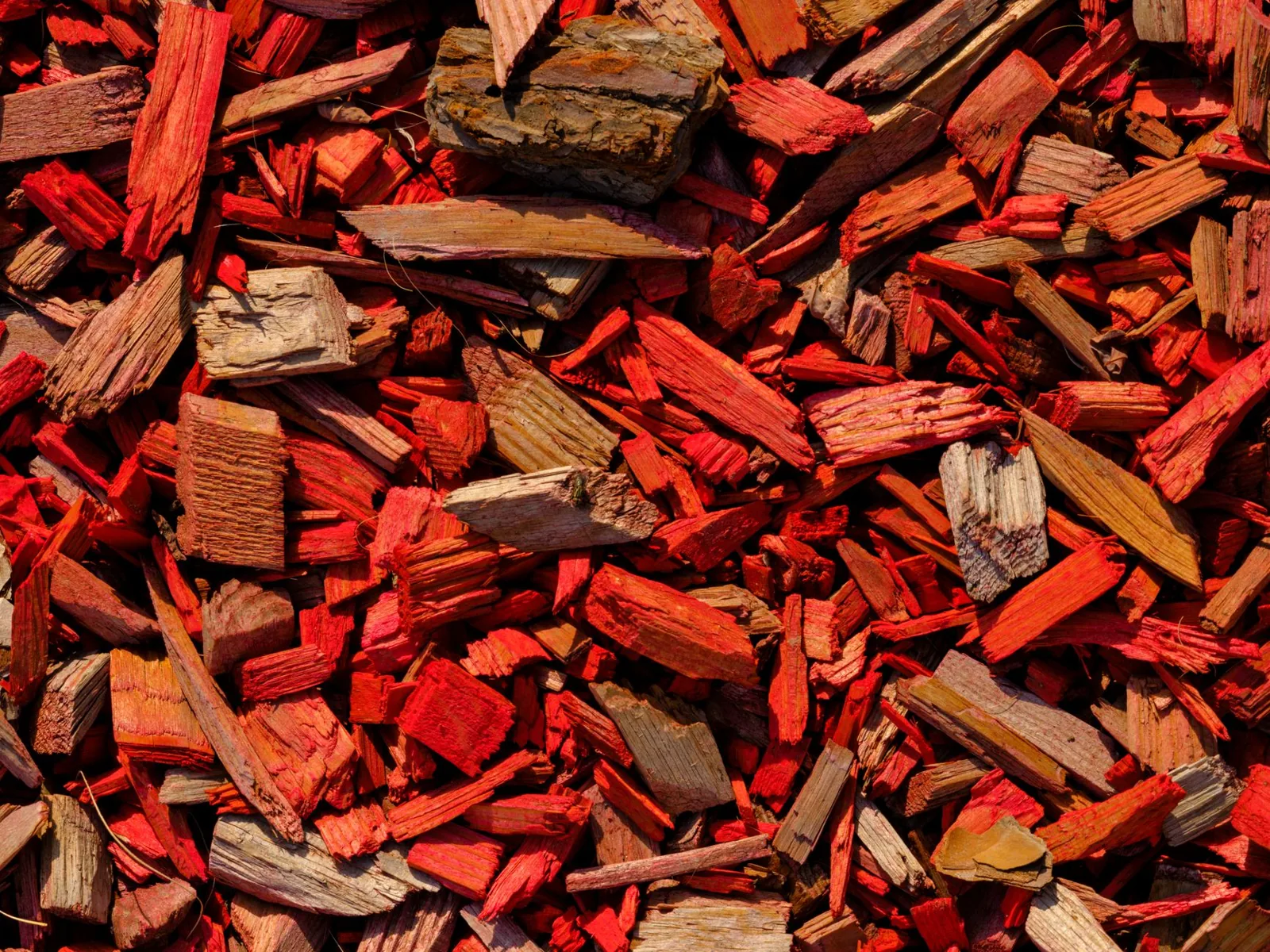
Before comparing prices, it helps to be clear on what you’re buying. Mulch is an organic ground cover — most commonly shredded hardwood, pine bark, cedar, or wood chips — that sits on top of the soil and slowly decomposes. Landscape rock is an inorganic cover made of stone: pea gravel, river rock, lava rock, crushed granite, or larger decorative cobble.
That one difference drives almost everything else. Mulch is a temporary soil amendment you refresh periodically. Rock is a permanent hardscape layer that sits there until someone physically hauls it away. Treating rock like “mulch that doesn’t need replacing” is the most common mistake homeowners make, because rock brings problems of its own that mulch simply doesn’t have.
Mulch vs. Rock Landscaping: What Each Option Costs
Upfront, organic mulch is hard to beat on price. Bagged hardwood mulch runs about $3 to $7 per 2-cubic-foot bag, which covers roughly 12 square feet at a 2-inch depth. Bulk mulch from a landscape supplier is cheaper still: expect $30 to $50 per cubic yard delivered or picked up, with premium options like cedar or dyed black mulch running $40 to $70 per cubic yard.
Rock costs noticeably more to buy and much more to have installed. Pea gravel and crushed stone typically run $40 to $85 per cubic yard, while decorative river rock, Mexican beach pebble, and larger cobble can hit $90 to $175 per cubic yard or more. Because rock is heavy, delivery fees are higher and most homeowners pay a crew to spread it. All in, expect to pay around $5 to $12 per square foot for professionally installed river rock versus roughly $2 to $5 per square foot for professionally installed mulch. For a broader look at what drives these numbers, see our guide to landscaping cost per square foot.
| Feature | Organic Mulch | Landscape Rock |
|---|---|---|
| Material cost | $30–$70 per cubic yard | $40–$175 per cubic yard |
| Installed cost | $2–$5 per sq ft | $5–$12 per sq ft |
| Lifespan before refresh | 1–3 years | 10–20+ years |
| Feeds the soil? | Yes, decomposes over time | No |
| Weeding effort | Low to moderate | Low, but weed barrier needed |
| Easy to remove later? | Yes | No — labor-intensive |
Notice the trade the table makes obvious: rock is two to three times more expensive up front, but those costs stop after installation. Mulch is cheap today, but you’ll pay for it every spring for as long as you own the home.
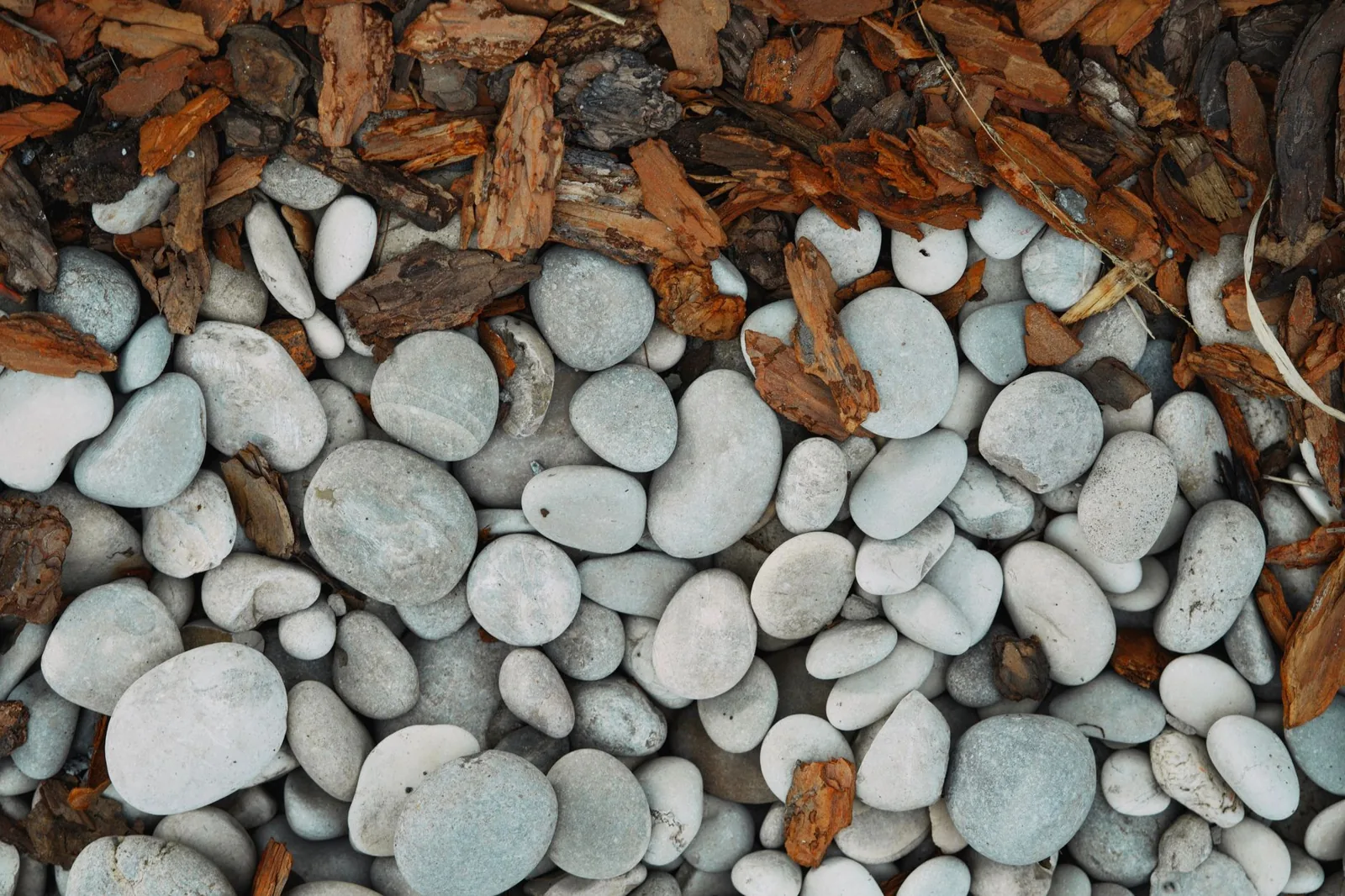
Photo by REFARGOTOHP via Pexels
Long-Term Maintenance: Which One Saves You Time?
This is where the economics flip. Organic mulch breaks down on a schedule you can almost set your watch to. In most climates, a 2 to 3-inch layer of hardwood or cedar mulch needs a fresh top-dressing every year and a full replacement every two to three years. If you have a lot of beds, that’s a recurring weekend of shoveling — or a recurring bill if you hire it out.
Rock, once it’s in place and underlaid with a quality landscape fabric, needs very little. You may rake it level from time to time, blow leaves off it in the fall, and pull the occasional weed that sprouts in the collected dust. The catch is that rock doesn’t stay pristine forever: debris and soil slowly sift down between the stones, creating enough organic material for weeds to germinate. When that happens, the fix is more involved than pulling a weed — you’re often vacuuming or washing grit out of your beds.
Removal is where rock really punishes you. Mulch decomposes into the soil on its own. Rock has to be shoveled, screened, and hauled away, which is why landscaping companies charge a premium for rock removal. If there’s any chance you’ll redesign the bed in a few years, that’s an argument for mulch on its own.
How Each Ground Cover Affects Soil and Plants
Mulch is genuinely good for your soil. As organic mulch decays, it feeds earthworms and soil microbes, improves soil structure, and gradually releases small amounts of nutrients. It also insulates the root zone, keeping soil cooler in summer and warmer in winter, and it slows evaporation — which means less watering. For flower beds, shrubs, trees, and vegetables, mulch is the horticulturist’s default for good reason.
Rock does none of that. It contributes no organic matter, and because it’s dense and dark when wet, it can actually raise soil temperatures on hot days. In a full-sun bed in a warm climate, rock can push the root zone several degrees hotter, which stresses plants that prefer cool feet. That’s why rock beds are usually planted with heat- and drought-tolerant species — ornamental grasses, succulents, lavender, and Mediterranean shrubs — rather than moisture-loving perennials.
Rock does have two real advantages for plants: it doesn’t compact or crust the way organic mulch can, and large stones drain beautifully. In a soggy, poorly draining bed, river rock lets water flow straight through instead of holding it against the stems and crowns of plants, which can reduce rot.
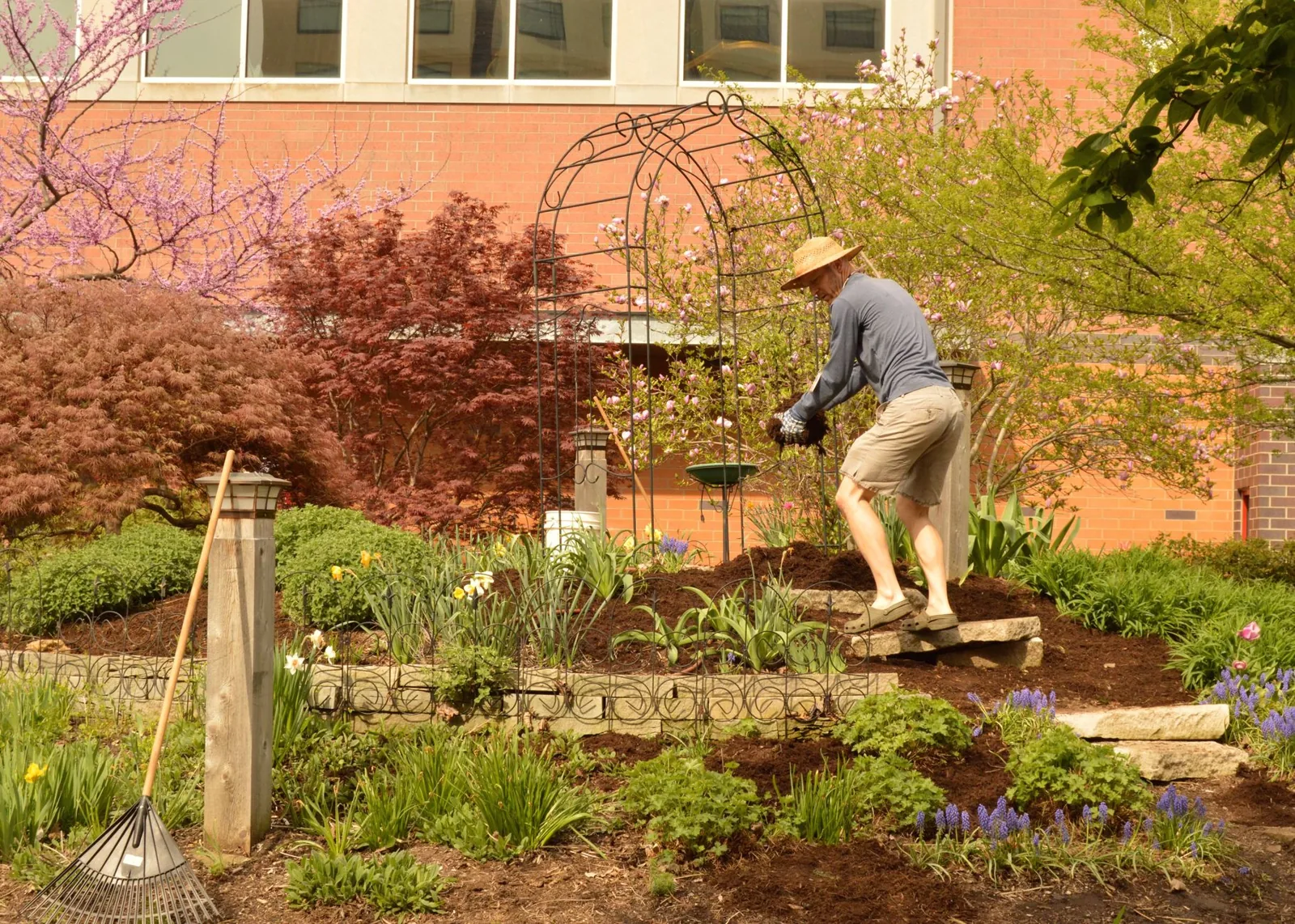
Photo by Zack Gilbert via Pexels
Climate and Site Conditions: Where Each Material Wins
Where you live should heavily influence the mulch vs rock landscaping decision. In cool, moist climates — the Pacific Northwest, the Northeast, much of the Midwest — organic mulch is usually the right call. It breaks down slowly, adds organic matter to heavy or sandy soils, and doesn’t contribute heat stress in climates that rarely see a scorching week.
In hot, dry, and fire-prone regions, rock earns real points. River rock and crushed stone are noncombustible, which is why many homeowners in wildfire zones replace mulch immediately around the foundation with a 5 to 15-foot band of gravel or stone — a widely recommended fire-safe landscaping practice. Rock also never needs a drip line re-routed the way thirsty mulch beds sometimes do. If you’re weighing watering setups to go with your beds, see our comparison of drip irrigation vs. sprinkler systems.
Slope matters too. Lightweight or shredded mulch can wash away in a hard rain on even a gentle grade, and it blows around on exposed, windy sites. Rock stays put on slopes and channelizes water, which makes it the better choice for erosion control, dry creek beds, and drainage swales. The trade-off is that rock on a slope can be miserable to weed, since you can’t easily rake it back into place.
Curb Appeal and Design Style
Rock and mulch read very differently from the street. Dark-dyed or natural brown mulch gives beds a tidy, low-contrast look that lets colorful flowers and shrubs do the talking. It suits traditional, cottage, and woodland-style landscaping, and it photographs well in real estate listings precisely because it looks freshly maintained.
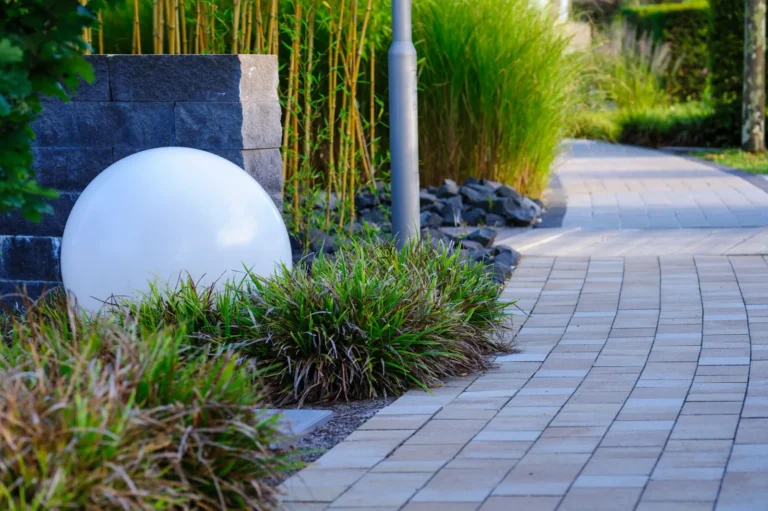
Rock delivers more texture and permanence. River rock and pea gravel suit modern, southwestern, and xeriscape designs, and they pair naturally with hardscape. A gravel border around a paver patio or a stone bed echoing a paver walkway ties the whole yard together in a way mulch rarely does. Rock also stays the same year after year, so there’s no spring fade that makes beds look neglected by late summer. If your broader goal is a finished-looking outdoor space, our roundup of hardscaping ideas for the backyard shows how stone beds, gravel paths, and pavers layer into a cohesive design.
The Best Choice for Common Scenarios
Still on the fence? Here’s how the decision usually shakes out in practice:
- Around trees and shrubs: Mulch, applied 2 to 3 inches deep but kept off the trunk and root flare.
- Vegetable and cutting gardens: Mulch — compost, straw, or shredded leaves — for the organic matter it adds.
- Foundation plantings in wildfire zones: Rock or gravel in a 5-foot noncombustible band.
- Dry creek beds, swales, and steep slopes: Rock, for drainage and erosion control.
- Xeriscape or low-water beds: Rock with drought-tolerant plants and a drip system.
- High-traffic paths: Crushed stone or pea gravel over landscape fabric, compacted for stability.
Frequently Asked Questions
Is rock or mulch cheaper in the long run?
Rock wins on long-run cost if you plan to stay in the home 10 years or more, because you install it once. Mulch wins if your horizon is shorter or if you’d rather spread smaller costs over time than pay a large install bill up front.
Does rock landscaping increase home value?
Clean, well-edged rock beds and gravel paths can improve curb appeal, especially in dry climates where they read as intentional and low-maintenance. Poorly maintained rock — sunken, weedy, or full of debris — does the opposite. There’s no premium specifically for rock versus mulch; buyers simply respond to a yard that looks cared for.
Do I need landscape fabric under rock?
Generally yes. Woven, nonwoven, or commercial-grade landscape fabric keeps the rock from sinking into the soil over time and slows weeds. Skip the cheap perforated plastic sheeting, which tears and becomes a mess to remove later.
Will rocks kill my plants with heat?
Not directly, but dark rocks can raise soil temperature enough to stress plants that prefer cool roots. In hot, full-sun sites, choose lighter-colored stone or stick with heat-tolerant species, and keep rock off the root zone of shallow-rooted perennials.
Which is better for weeds?
Fresh mulch over a solid base suppresses most weeds, but as it decays it becomes a perfect seedbed, so you’ll top-dress and hand-pull yearly. Rock suppresses weeds well only over a proper fabric layer; without it, weeds are actually harder to remove because their roots thread around the stones.
For a deeper look at mulching best practices, see This Old House’s guide to mulch.
The Bottom Line
For most homeowners, the mulch vs rock landscaping question has a clear but conditional answer. Choose organic mulch if you’re planting flower beds, shrubs, or vegetables in a moderate climate, want to improve your soil over time, and don’t mind a yearly top-dressing. Choose landscape rock if you want a long-term, low-maintenance surface, live in a hot or fire-prone region, need erosion control, or are building a xeriscape or modern design — and you’re willing to pay more up front and commit to the look.
Whatever you pick, the difference between a yard that looks sharp and one that looks sloppy is the prep work underneath: a clean, weeded base, a defined edge, and the right depth applied evenly. Get that right, and both materials will do exactly what they’re supposed to do for years to come. If you’re ready to estimate what the whole project will run, start with our article on landscaping cost per square foot, then map out a plan that fits your climate, your plants, and your budget.