Outdoor Storage Bench Ideas: 12 Ways to Hide Patio Clutter in Plain Sight
A good outdoor storage bench solves two problems with one piece of furniture: it gives you a place to sit and a dry, locked-down spot for the stuff that otherwise sprawls across the patio. Cushions, pool toys, garden tools, barbecue tools, kids’ sidewalk chalk — it all has to live somewhere, and a bench beats a pile of plastic totes in the corner of the yard every time.
The best outdoor storage bench ideas aren’t just about capacity. They’re about matching the bench to how you actually use your space — how much you need to hide, how much rain it has to survive, and whether it will face full sun on a deck or sit under a covered porch. Below I’ve pulled together twelve practical ideas, the materials that hold up, and honest pricing so you can pick something that lasts more than two summers.
What to Look For in an Outdoor Storage Bench
Before you shop, decide on four things: capacity, weather resistance, weight, and where the bench will live. Getting these right matters more than the style.
Capacity and Interior Volume
Storage benches are usually rated in gallons. A small bench holds 30–50 gallons, a mid-size bench 70–100 gallons, and a large deck box or storage sofa can reach 120–230 gallons. As a rough translation, a 100-gallon box will swallow four to six standard seat cushions plus a couple of throw pillows, but not much more. If you store pool toys, buy bigger than you think — these things fill up fast.
Weather Resistance
Anything marketed as “weather-resistant” is not the same as “waterproof.” Resin and polywood benches shed water and won’t rot, but a sealed lid and a floor gap that keeps the base off standing water are what actually keep the inside dry. Wood benches need a waterproof liner or a coat of exterior sealant every couple of years. If your bench will sit on bare ground, look for a raised or footed base.
Weight and Stability
Light resin benches can blow over in a windstorm when empty. Aim for something with enough heft to stay put, or plan to anchor it. Wood and metal are heavier and more stable but harder to move for cleaning. If you live in a windy or storm-prone area, factor this in before you buy the cheapest box on the shelf.
Photo by ready made via Pexels
12 Outdoor Storage Bench Ideas for Every Style and Budget
Here are the ideas I’d actually recommend, organized from cheapest to most ambitious. Most of these work on a deck, patio, porch, or beside a pool.
- A basic resin deck box. Keter and Suncast make 70–120-gallon resin boxes in the $80–$180 range. They’re light, won’t rot, and snap together in about 20 minutes. The tradeoff is looks — they read as “plastic,” which is fine on a pool deck and less fine on a covered front porch.
- A storage bench with a real backrest. Instead of a flat-topped box, look for a bench with an angled back and armrests. It seats like actual furniture and still hides 60–90 gallons underneath. Expect to pay $150–$350.
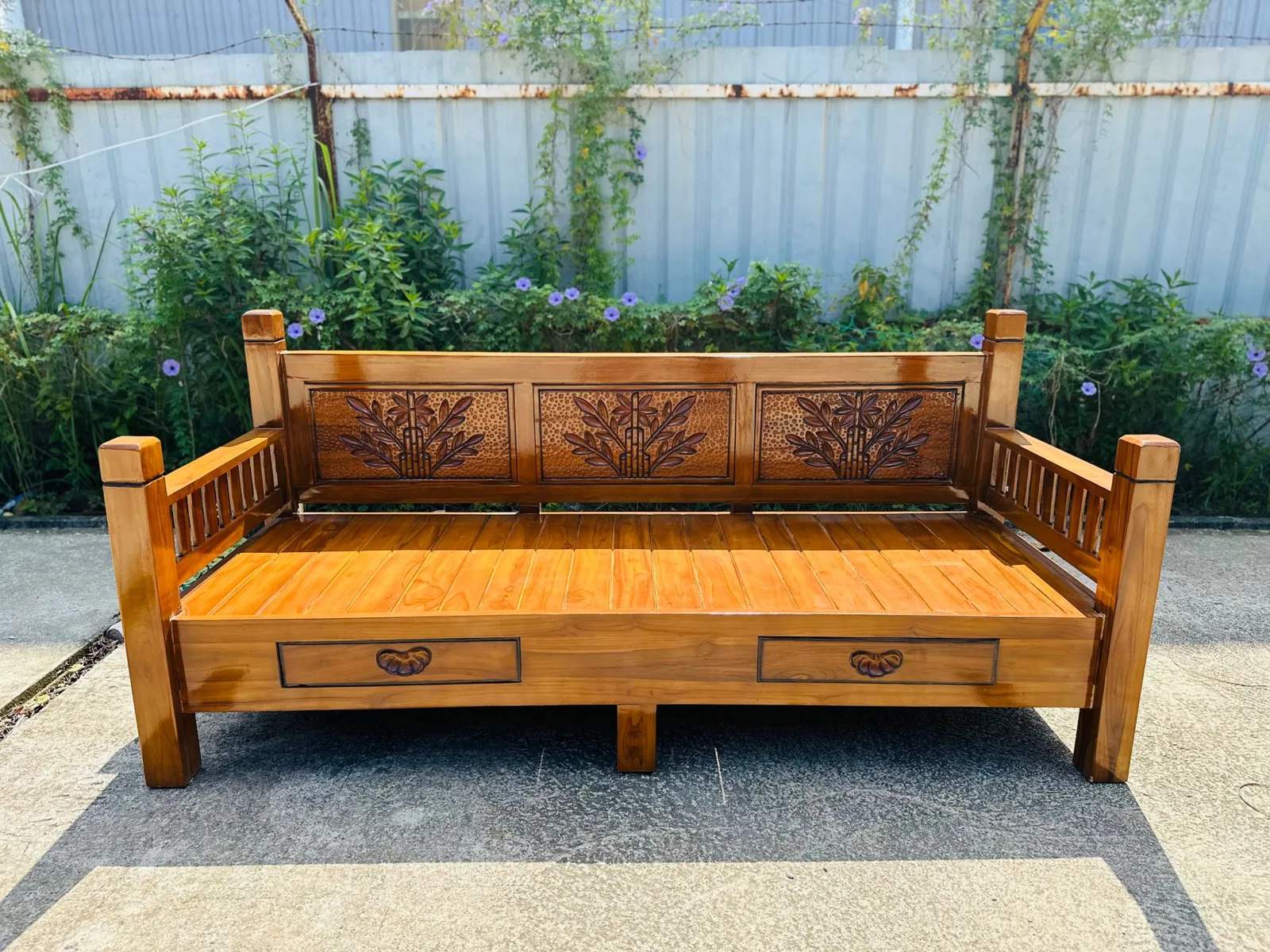
- A weatherproof teak or eucalyptus bench. Solid hardwood benches from brands like Christopher Knight Home hold up for years but cost $300–$700. The wood weathers to a silver-gray if you skip the oil, which many people prefer.
- A polywood storage bench. Polywood (recycled HDPE plastic lumber) looks like painted wood but never needs sealing, painting, or sanding. Benches run $250–$600 and are the closest thing to zero-maintenance outdoor seating you can buy.
- A DIY cedar storage bench. Two 2×4s, a few cedar fence boards, and a Saturday of work gets you a custom bench for $120–$250 in materials. Cedar resists rot and insects naturally, and you can size the seat to a specific wall or corner.
- A cushion-and-throw setup on top of a box. Buy a plain resin box, then dress it up with a fitted seat cushion and two outdoor pillows. Total cost is often under $250, and the cushion turns a plastic box into a seat people actually use.
- A storage bench that doubles as a planter. Some models pair a bench seat with a built-in planter box on one end. It anchors the piece visually and gives you a spot for trailing plants that soften the hard plastic or wood.
- A bench with gas springs. Cheap benches have lids that slam on fingers. Mid-range models add gas struts that hold the lid open and close it slowly — worth the extra $30–$60 if kids use the patio.
- A locking bench for tools. If you keep pruners, a cordless drill, or a hose reel inside, get a bench with a padlock hasp. A hasp and a $10 weatherproof padlock keep curious kids and casual thieves out.
- An aluminum storage bench. Powder-coated aluminum boxes from brands like Leisure Season hold up to salt air and coastal humidity far better than steel. They’re pricier ($300–$600) but the right call near the ocean.
- A storage sofa for the fire pit. The largest boxes stretch to 230 gallons and seat three adults. Place one across from a fire pit and it becomes the default hangout spot — while hiding every pool noodle you own.
- A built-in bench under a pergola or deck. The most permanent option is framing storage into an existing structure — a flip-up bench seat along a deck edge or pergola wall. This is a weekend-to-a-few-days project, but it’s the only option that looks truly custom.
Deck Box vs. Storage Bench vs. Storage Sofa
If you’re torn between the three main forms, here’s how they break down side by side.
| Feature | Deck Box | Storage Bench | Storage Sofa |
|---|---|---|---|
| Typical capacity | 70–120 gal | 60–90 gal | 120–230 gal |
| Seating comfort | Low, no backrest | Comfortable, has a back | Seats 2–3 adults |
| Price range | $80–$180 | $150–$350 | $300–$700 |
| Best for | Pool decks, utility | Porches, patios | Fire pits, large decks |
| Looks | Basic, plastic | Furniture-like | Furniture-like, biggest |
For most homeowners, a storage bench is the sweet spot: it looks like real furniture, seats comfortably, and holds more than enough for cushions and a few tools. Step up to a sofa only if you have a big family and a big deck to match.
Best Materials for an Outdoor Storage Bench
Material matters more than brand. Here’s what holds up and what doesn’t.
- Resin / polypropylene. Cheap, light, never rots, but fades in direct sun and can look cheap. Best for pool areas and hidden corners.
- Polywood / recycled HDPE. The durability champ. No painting, no sealing, no rot, resists sun and salt. Costs more but lasts 15+ years.
- Cedar. Naturally rot- and insect-resistant, easy to work with for DIY, weathers silver. Needs periodic sealing if you want to keep the color.
- Teak and eucalyptus. Gorgeous hardwoods that hold up to weather. Teak is expensive ($500+); eucalyptus is a budget stand-in. Both benefit from an annual oiling.
- Powder-coated aluminum. Rust-proof and light, ideal near salt water. Usually more expensive and less “cozy” looking than wood.
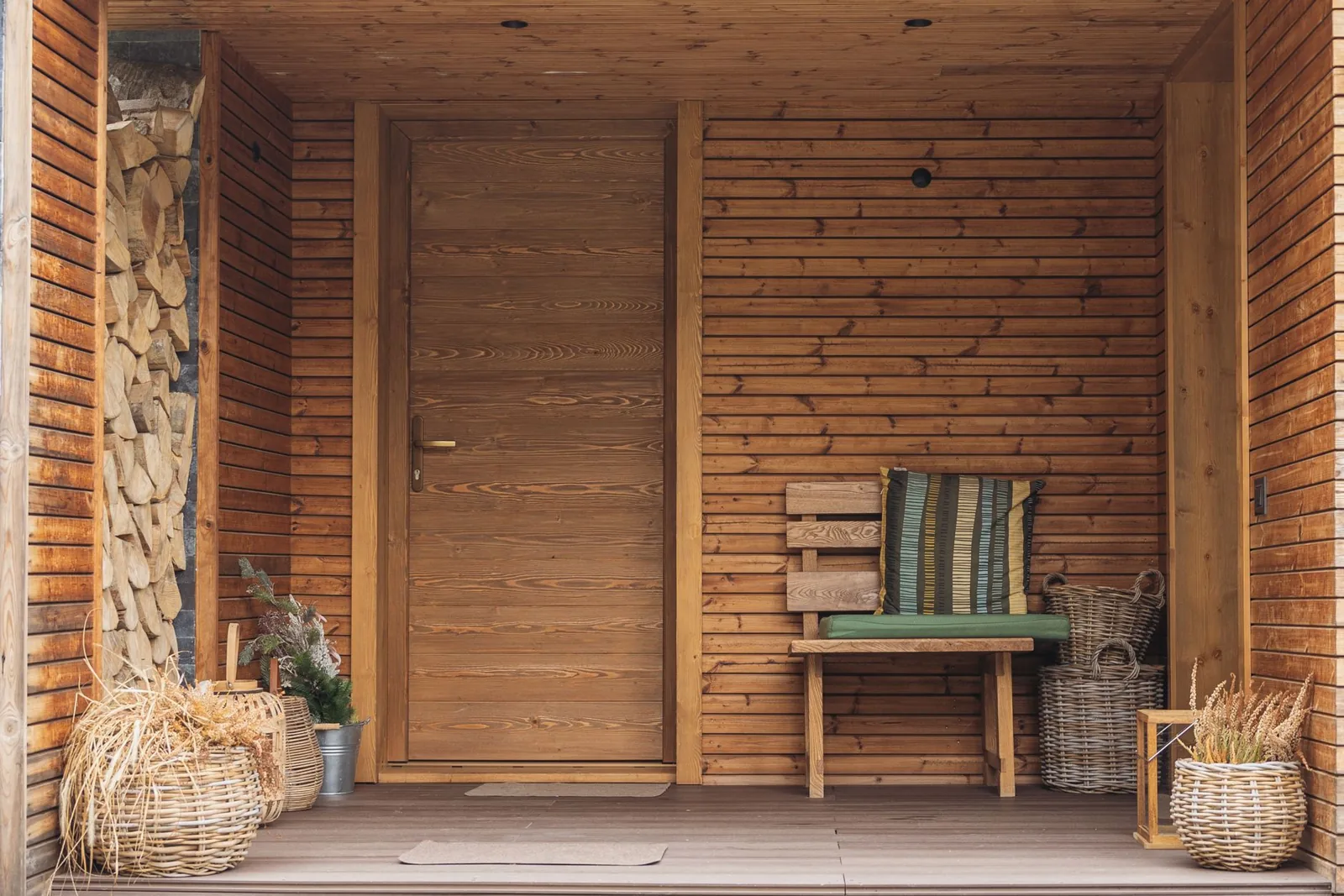
Photo by Iulian Sandu via Pexels
How Much Does an Outdoor Storage Bench Cost?
You can spend anywhere from $80 to over $1,000, but most good benches land in the $150–$400 range.
- $80–$180: Basic resin deck boxes (Keter, Suncast, Rubbermaid).
- $150–$350: Storage benches with backs, mid-size polywood pieces, most DIY builds.
- $300–$700: Hardwood teak/eucalyptus benches, polywood benches with cushions, aluminum boxes.
- $700+: Extra-large storage sofas and premium teak.
A DIY cedar bench is the budget route if you already own a saw and drill — $120–$250 in materials beats $400 for a comparable store-bought piece. If you’d rather not build, skip the cheapest flat-lid box and pay the extra $60–$100 for a bench with a back and gas struts. That’s the difference between furniture you keep and a plastic box you hide behind the grill.
Where to Place Your Outdoor Storage Bench
Placement changes how often you actually use it. Put the bench where the mess already lives, not where it photographs best.
- Next to the back door for shoes, dog leashes, and the things you grab on the way out.
- Along a deck rail to reclaim the dead corner where cushions used to pile up.
- Beside the pool for towels, goggles, and sunscreen — resin holds up to chlorine splashes.
- On a covered porch for throws and reading material, where a wood bench won’t get hammered by rain.
- Across from a fire pit or outdoor sofa as extra seating that doubles as storage.
Whatever spot you pick, keep the base off bare soil and out of standing water. Even rot-resistant materials last longer on a level, drained surface — a few pavers or deck blocks underneath make a real difference. If the bench will sit beside a garage wall, check that the lid can open fully without hitting the siding, and think about how it pairs with your broader garage organizer ideas if you’re also tidying the space just inside the door.
Frequently Asked Questions
Are outdoor storage benches waterproof?
Most resin and polywood benches are water-resistant, not fully waterproof. They shed rain, but water can still sneak past the lid seal in a heavy storm or driving wind. Wood benches are the least waterproof and benefit from a liner or regular sealing. If dry contents are critical, keep items in waterproof bags inside the bench.
How much can an outdoor storage bench hold?
Capacity is measured in gallons, typically 30 to 230. As a rule of thumb, 70 gallons handles a few cushions; 100+ gallons covers cushions, pool toys, and small tools. Weight limits for seating are usually 400–700 pounds, which matters if two or three adults will sit on it at once.
Can I build my own outdoor storage bench?
Yes, and it’s one of the more forgiving DIY projects. Cedar is the easiest material to work with, and a simple hinged bench is doable in a weekend with basic tools. Budget $120–$250 for materials and another $20–$40 for a liner and hinges.
How do I keep an outdoor storage bench from molding?
Ventilation is the answer. Look for a bench with small vent gaps or drill a few in the back panel if yours lacks them. Keep the bench off standing water, empty it and air it out after long rainy stretches, and toss in a moisture absorber if you store anything absorbent like fabric.
Do outdoor storage benches lock?
Some do, some don’t. If security matters — for tools or a hose reel you’d rather keep out of little hands — buy a model with a padlock hasp and pair it with a weatherproof padlock. It’s a cheap upgrade that also keeps wildlife out of your cushions.
For build plans and wood choices, Family Handyman offers DIY outdoor storage bench plans.
The Bottom Line
The right outdoor storage bench earns its footprint twice over: it hides the clutter that makes a patio look messy and gives you one more place to sit when company shows up. Skip the cheapest flat-lid box if you can, spend the extra money on a bench with a back and a sealed lid, and match the material to your climate — polywood for full sun and heavy rain, aluminum near the coast, cedar if you want to build it yourself.
Before you buy, measure your cushions and pool toys and pick a capacity that’s bigger than today’s pile, because the bench will quietly collect more over the years. And if you’re using the bench to mask a storage crunch that runs deeper than the patio — think overflowing shed or a packed garage — it’s worth a look at what a detached garage cost really adds up to, or whether a garage insulation guide can turn underused square footage into clean, dry storage before you buy another box for the yard.