River Rock Landscaping Ideas: 15 Low-Maintenance Ways to Use Decorative Stone
River rock landscaping ideas are some of the cheapest, longest-lasting ways to finish a yard, and they require almost nothing from you once they are in place. Unlike mulch, which breaks down and needs topping off every spring, river rock stays put for a decade or more. Unlike grass, it never asks for water, mowing, or fertilizer.
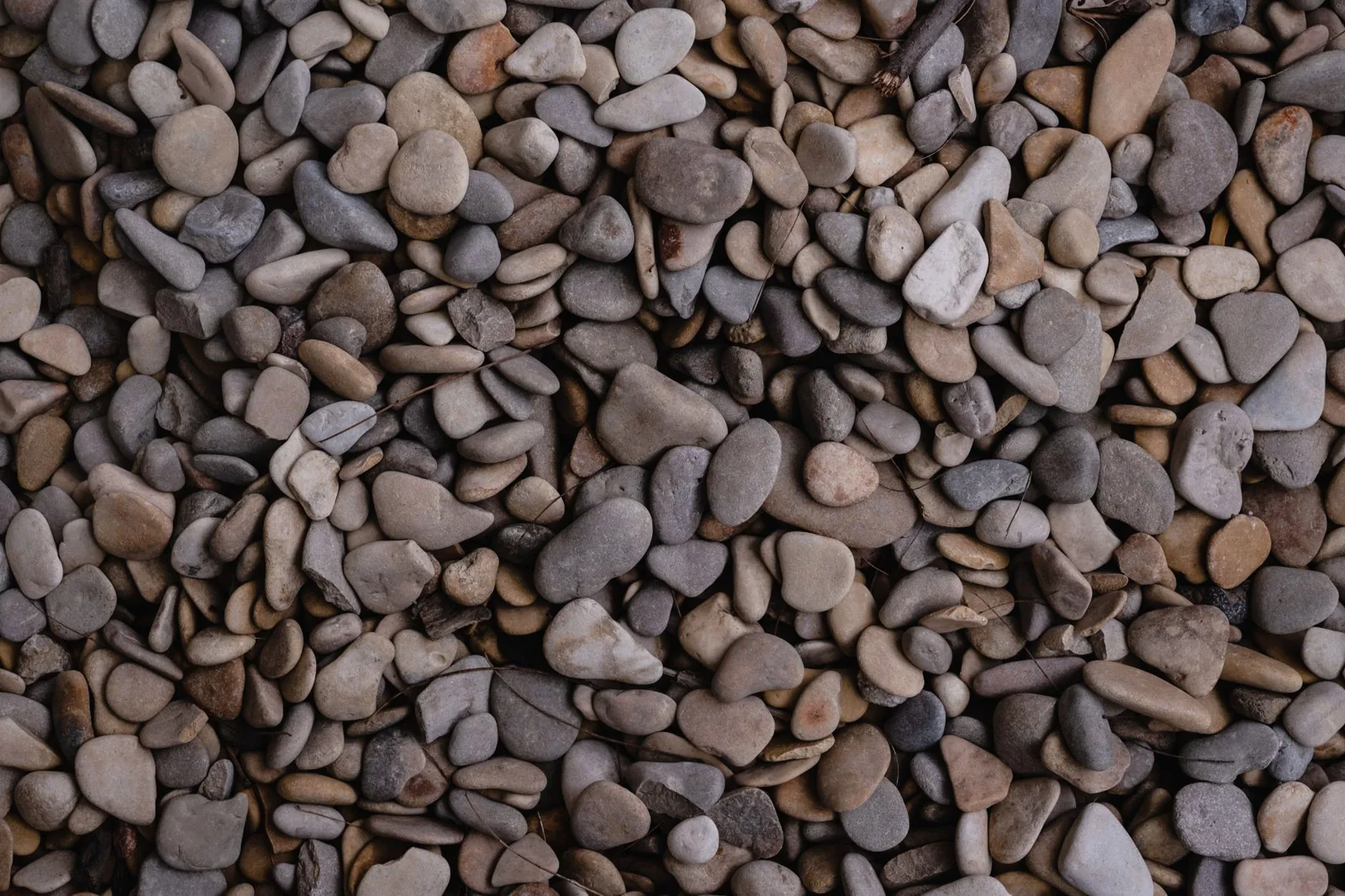
River rock — the smooth, rounded stone that starts its life tumbling along streambeds and riverbanks — reads as both natural and polished. It comes in sizes from pea-sized (about 3/8 inch) up to hefty 4-to-6-inch cobbles, and in colors ranging from warm browns and tans to gray, white, and mixed blends. That range is exactly why it works in everything from a dry creek bed to a modern front-yard border.
Below are 15 river rock landscaping ideas that hold up in real yards, plus what they cost, how much stone you actually need, and the step that most people skip — and regret.
Why River Rock Works in Almost Any Yard
River rock does three things at once: it suppresses weeds, holds moisture in the soil beneath it, and drains water fast away from foundations. That last point matters more than most homeowners realize. Because the stones are rounded and don’t pack tightly, water moves through them freely, so you don’t get the puddling that a solid paver pad or tightly compacted gravel can create near a downspout.
It is also genuinely low-maintenance compared to the alternatives. A 2019 check of the numbers by home-improvement publications puts out one consistent finding: wood mulch needs replacing or topping up every one to three years, while landscape rock often lasts 10 to 20 years before it needs a simple rinse or a fresh half-inch on top. If your goal is to stop doing yard chores rather than add new ones, stone wins.
The tradeoffs are real, though. River rock costs more up front than mulch, it can hold heat in full sun, and it is heavy to move. Budget for delivery and, for anything bigger than a small border, a wheelbarrow and a strong back or a hired hand.
15 River Rock Landscaping Ideas Worth Copying
Here are the uses that landscape pros come back to again and again, ranked roughly from cheapest and easiest to the most involved.
- Dry creek bed. The classic river rock project. Dig a shallow, winding channel, line it with landscape fabric, and fill it with mixed-size rock. Use larger cobbles at the edges and smaller stone in the middle. It turns a low, soggy spot into a design feature and gives rainwater a route instead of a puddle. Expect to pay $300 to $1,200 in material for a 20-foot run, depending on depth and stone size.
- Rock border or edging. A 6-to-12-inch strip of river rock along a foundation, fence line, or bed edge stops the mower and the string trimmer from chewing up siding and plants. It’s the single most affordable way to make beds look intentional. One ton (about $50 to $180) covers roughly 100 square feet at a 2-inch depth, which handles a long border.
- River rock mulch around trees and shrubs. Swap shredded mulch for stone around the base of trees. It won’t wash away, won’t attract rodents the way wood can, and keeps the soil cooler. Leave 6 inches of bare ground at the trunk so you’re not burying the root flare.
- A stone “moat” around a downspout or AC pad. Surround a downspout elbow or your air-conditioner condenser with stone to stop splash-back and mud. This is a two-hour weekend job that solves a real drainage problem.
- Mulch-free front-yard beds. Front beds in full sun are where mulch shows its weakness — it fades and thins within months. River rock in browns and tans reads as tidy all year, and it never migrates onto the driveway the way bark chips do.
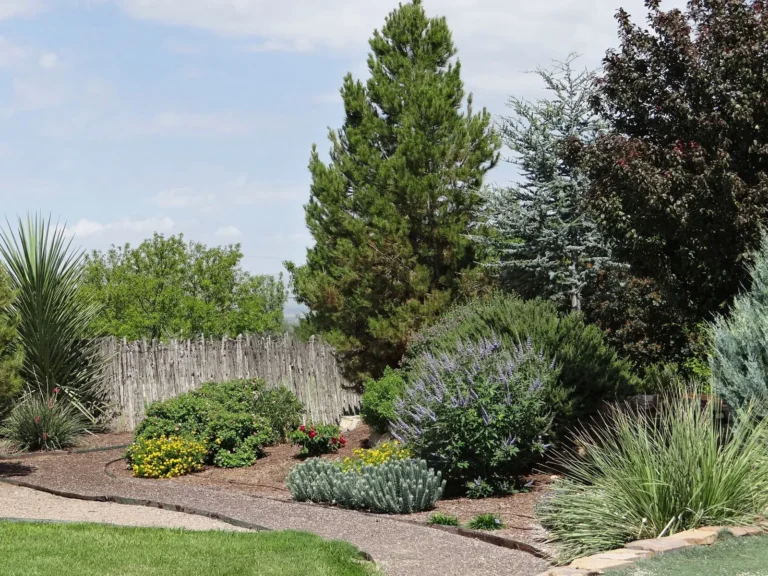
- Rock garden with drought-tolerant plants. Pair stone with sedum, ornamental grasses, yucca, or lavender in a gravel-and-rock bed. The stone holds heat at night, which these dry-climate plants love, and the combination barely needs irrigation.
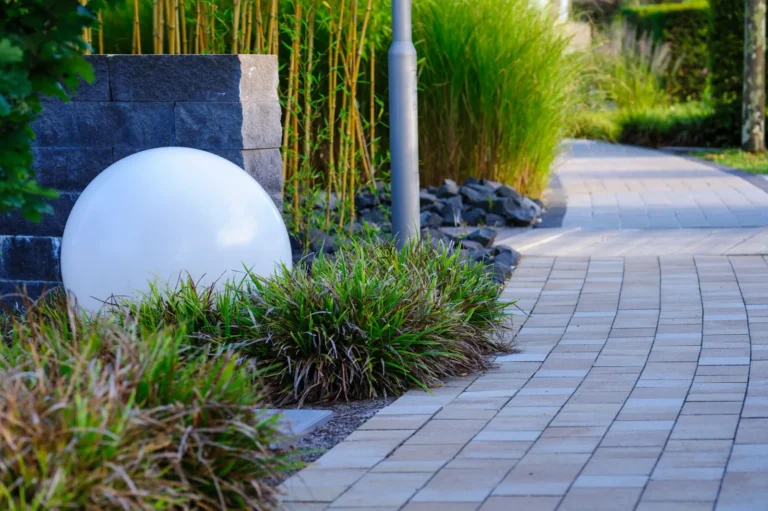
- Paver path with rock joints. Lay large flagstone or concrete pavers and fill the gaps between them with small river rock instead of mortar or polymeric sand. It drains well and looks softer and more natural than a solid path. See our piece on paver walkway ideas for more direction.
- Xeriscape front yard. Replace a thirsty lawn strip with landscape fabric, river rock, and a few sculptural plants. This is a common turf-removal strategy in the western US, where many municipalities offer rebates for removing grass — some pay $1 to $3 per square foot, which can offset the whole stone bill. Our guide to drip irrigation vs. sprinkler systems covers how to water what remains efficiently.
- Fire-pit surround. A ring of river rock around a fire pit, 3 to 4 feet out from the bowl, creates a non-flammable safety zone and a clean, finished look. You’ll want river rock here rather than a sharper crushed stone if you’re walking on it barefoot.
- Pond or fountain edge. Smooth river rock is the natural choice to hide a pond liner or fountain basin edge. It softens the transition from water to yard and looks like it has always been there.
- Stone apron under a deck. The shaded ground under a deck grows little anyway — cover it with river rock and fabric and you’ve got a clean, elevated look that never needs mowing.
- Path border contrast. Use white or light-gray river rock to edge a darker mulch bed or flagstone path. The contrast defines the space without a hard metal or plastic edge.
- Water-feature base. Layer river rock at the base of a bubbling fountain or birdbath to catch overflow and keep mud from forming where the birds splash.
- Slope and erosion control. On a steep bank, a thicker 3-to-4-inch layer of larger river rock slows erosion where grass can’t get established. This one is more material-intensive, but it is permanent.
- Whole-yard ground cover. At the far end of the commitment scale, some homeowners cover an entire side yard or backyard in river rock and skip grass altogether — a favorite fix for narrow, hard-to-mow side yards. This is where most of your budget goes, so get the cost per square foot right (below) before you commit.
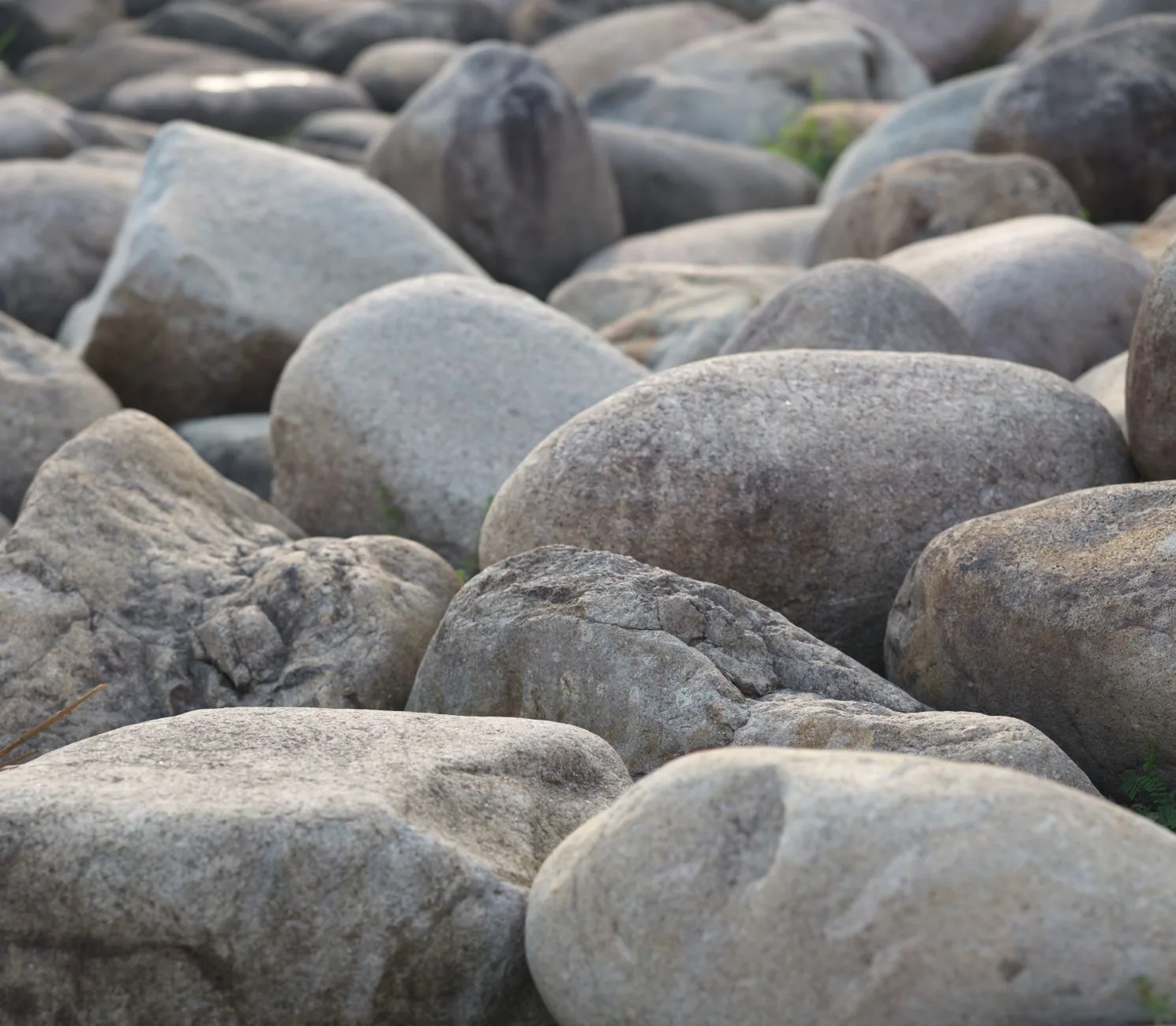
Photo by Li Sun via Pexels
What River Rock Costs: Budget by the Square Foot
Stone pricing is all over the map because weight, color, and distance from the quarry drive it. Here are the numbers homeowners actually see:
| Material | Typical unit cost | Cost per 100 sq ft (2-in depth) | Notes |
|---|---|---|---|
| Bulk river rock (1-3 in) | $50-$180 per ton | $50-$180 | Most economical; delivered loose |
| Bagged river rock | $3-$6 per 0.5 cu ft bag | $120-$240 | Cleaner for small jobs; premium |
| Larger cobbles (3-6 in) | $80-$250 per ton | $80-$250 | For creek beds and accents |
| Professional install | $90-$300 per cubic yard installed | $135-$450 | Includes fabric, labor, delivery |
A cubic yard of river rock weighs roughly 2,400 to 2,700 pounds, and a ton covers about 100 square feet at a standard 2-inch decorative depth. Bagged stone costs two to three times as much as bulk for the same coverage, so anything beyond a border or two is almost always worth ordering in bulk and having it dumped on the driveway.
The budget difference between DIY and pro install is mostly labor. A crew will typically charge $45 to $80 per hour on top of material, and most small river rock jobs take half a day. If you’re covering more than 300 square feet, the delivery fee (usually $40 to $100 per load) becomes a rounding error.
How to Install River Rock So Weeds Don’t Win
The phrase “weeds came through my rock” almost always traces back to one skipped step. Here is the order that keeps the bed clean for years:
- Kill what’s there first. Spray the area with a non-selective herbicide or solarize it under clear plastic for a few weeks. Laying rock on live turf just buries a weed problem.
- Excavate 2 to 4 inches. The depth depends on your stone size and whether people will walk on it. Decorative beds get 2 inches; paths and creek beds get 3 to 4.
- Add a border. Steel, composite, concrete, or even larger cobbles hold the rock in place and keep it out of the lawn. Without an edge, rock creeps into the grass and turns your mower blade into a stone slinger.
- Lay commercial-grade landscape fabric. This is the step people skip. Cheap woven fabric tears in a season; use a heavy non-woven material rated for stone, and overlap seams by 6 to 12 inches. Use pins every 2 to 3 feet.
- Fill and rake level. Dump the rock in piles and spread it with the back of a rake. For a 2-inch depth, use the 324 rule: square feet times desired depth in inches, divided by 324, equals cubic yards. A 200-square-foot bed at 2 inches is 400 ÷ 324, or about 1.23 cubic yards.
- Top up in the spring. Expect to add a thin half-inch every few years as the layer settles. It’s a 10-minute job with a couple of bags, not a restart.
If your whole goal is a lower-water yard, pair the rock with the plantings in our xeriscaping ideas for front yard guide — rock and drought-tolerant plants are designed to work together.
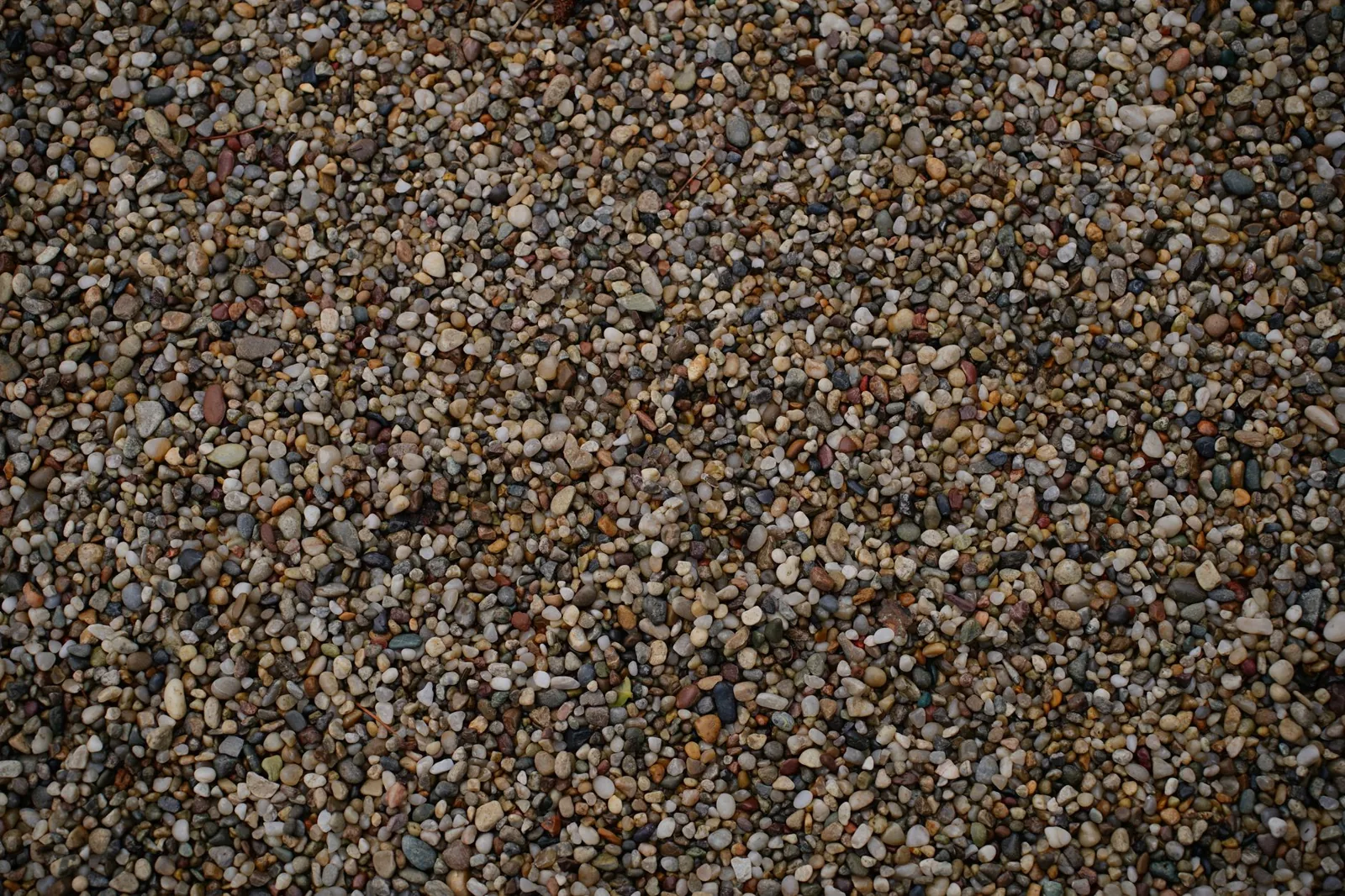
Photo by Sema Nur via Pexels
River Rock vs. Mulch, Gravel, and Pea Gravel
If you’re still deciding, this is the quick version of the tradeoffs, and our mulch vs rock landscaping guide dives deeper into the up-front versus lifetime math:
| Feature | River rock | Wood mulch | Crushed gravel / DG |
|---|---|---|---|
| Up-front cost | Higher | Lowest | Moderate |
| Life span | 10-20 years | 1-3 years | 5-10 years |
| Weed suppression | Excellent (with fabric) | Good (first year) | Very good |
| Drainage | Excellent | Good | Excellent |
| Heat retention | High in full sun | Low | High |
| Walking comfort | Moderate (smooth) | Soft | Sharp underfoot |
| Maintenance | Very low | Annual top-up | Low |
The short version: pick river rock if you want to set it and forget it and don’t mind the up-front spend. Pick mulch if you’re on a tight budget, like the soft look, or have a bed you redesign every couple of years. Pick crushed gravel or decomposed granite where you need a firm, packable surface for walking — river rock rolls underfoot and is a poor choice for a main path you walk daily. For more on what landscaping costs across a whole project, see our breakdown of landscaping cost per square foot, and check hardscaping ideas for a backyard if you’re pairing stone with patios and walls.
Frequently Asked Questions
Does river rock keep weeds out?
It does, but only when installed over good landscape fabric. Rock alone has gaps that let light and seeds through. The fabric is what blocks weeds; the rock is what blocks the light and holds the fabric down.
How deep should river rock be?
Two inches for decoration, three for high-traffic paths, and three to four inches for creek beds and erosion-prone areas. Going thicker than four inches wastes money and makes the surface harder to walk on.
Will river rock hurt my plants?
In full sun, river rock can raise soil temperature because it absorbs and re-radiates heat. That’s great for drought-tolerant plants and bad for shallow-rooted plants that prefer cool soil. Match the rock to plants that like heat, or reserve sunny rock beds for heat-tough species.
Can I put river rock directly on soil?
You can, but you’ll be weeding it within a season. Spend the extra money on a quality non-woven landscape fabric in year one and you won’t be pulling grass out of stone every summer after.
How much does river rock weigh per cubic yard?
Roughly 2,400 to 2,700 pounds, or about 1.2 to 1.35 tons per cubic yard. Use that when you’re comparing bulk-by-ton pricing against your cubic yard estimate, and add a 5 to 10 percent overage for settling.
For drainage and weed-fabric specifics, This Old House covers landscaping with river rock.
The Bottom Line
River rock landscaping ideas are a straightforward trade: more money and one hard weekend up front, in exchange for a decade of a yard that drains well, stays weed-free, and never needs mowing, mulching, or watering. The projects that deliver the most bang for the buck are the dry creek bed, the foundation border, and the downspout moat — all three solve a real drainage or maintenance problem while looking like a deliberate design choice.
Get your square footage right, don’t skimp on the fabric, and build an edge before you spread a single stone. Do those three things and river rock is one of the few landscape investments that actually stops asking you for time, year after year.