Garage Organizer Ideas: 12 Practical Ways to Reclaim Your Garage
A garage that doubles as a dumping ground is a problem almost every homeowner recognizes. Bikes lean against the lawn mower, holiday bins bury the tool chest, and the car ends up parked in the driveway all winter. The fix is rarely more willpower—it’s a system. These garage organizer ideas turn the messiest room in the house into usable square footage, whether you’re working with a single-car garage or a three-bay workshop.
The good news is that organizing a garage doesn’t have to cost thousands of dollars or require a professional. Most of what makes a garage chaotic is the absence of vertical storage and clear zones, and both of those are cheap to fix. Below are twelve concrete strategies, from weekend DIY jobs to full wall-system installs, ranked by how much impact they deliver for the money.
Why Garages Get Messy (and Stay Messy)
Garages fail for the same reason year after year: they’re the default landing spot for anything that has no other home. Lawn chemicals, sports equipment, paint cans, and off-season clothing all pile up against the walls, and because the space has no closet rods or shelving built in, everything ends up on the floor.
That floor-level storage is the real culprit. A standard two-car garage gives you roughly 400 to 480 square feet of floor space, but a surprisingly small share of it is actually usable once the cars are inside. The most effective garage organizer ideas push items up off the floor and onto walls, ceilings, and shelving, which instantly frees up the single most valuable resource in the room: parking space.
Start by Decluttering Before You Buy Anything
No storage system fixes a volume problem. Before you spend a dollar on hooks or cabinets, do a fast purge so you’re organizing what you actually keep, not what you’ve been avoiding.
- Trash it. Rusted cans, dried-out paint, and broken tools don’t need a shelf—they need the dump. Many cities run household hazardous-waste days for old paint and chemicals.
- Donate or sell it. If you haven’t used it in two years and it doesn’t have a clear seasonal job, list it or give it away.
- Sort what’s left. Group items into broad categories—tools, sports gear, garden, automotive, holiday—so you can see how much storage each category actually needs.
This step takes a weekend and costs nothing, and it’s the difference between buying a $400 wall system that works and buying one that just relocates the same clutter to eye level.

Photo by cottonbro studio via Pexels
Wall Storage: The Workhorse of Garage Organizer Ideas
Walls are the most underused surface in almost every garage. Once you commit to getting items off the floor, wall storage delivers the biggest return because it’s modular, cheap, and easy to reconfigure as your needs change.
Slatwall and Track Systems
A track or slatwall system is the single best starting point for most homeowners. Brands like Gladiator GearTrack, Rubbermaid FastTrack, and Flow Wall sell horizontal rails that screw into the studs, plus a huge catalog of hooks, baskets, and shelves that snap on and off in seconds. Expect to pay roughly $40 to $100 for a starter rail kit with hooks, and $200 to $400 to outfit a full wall.
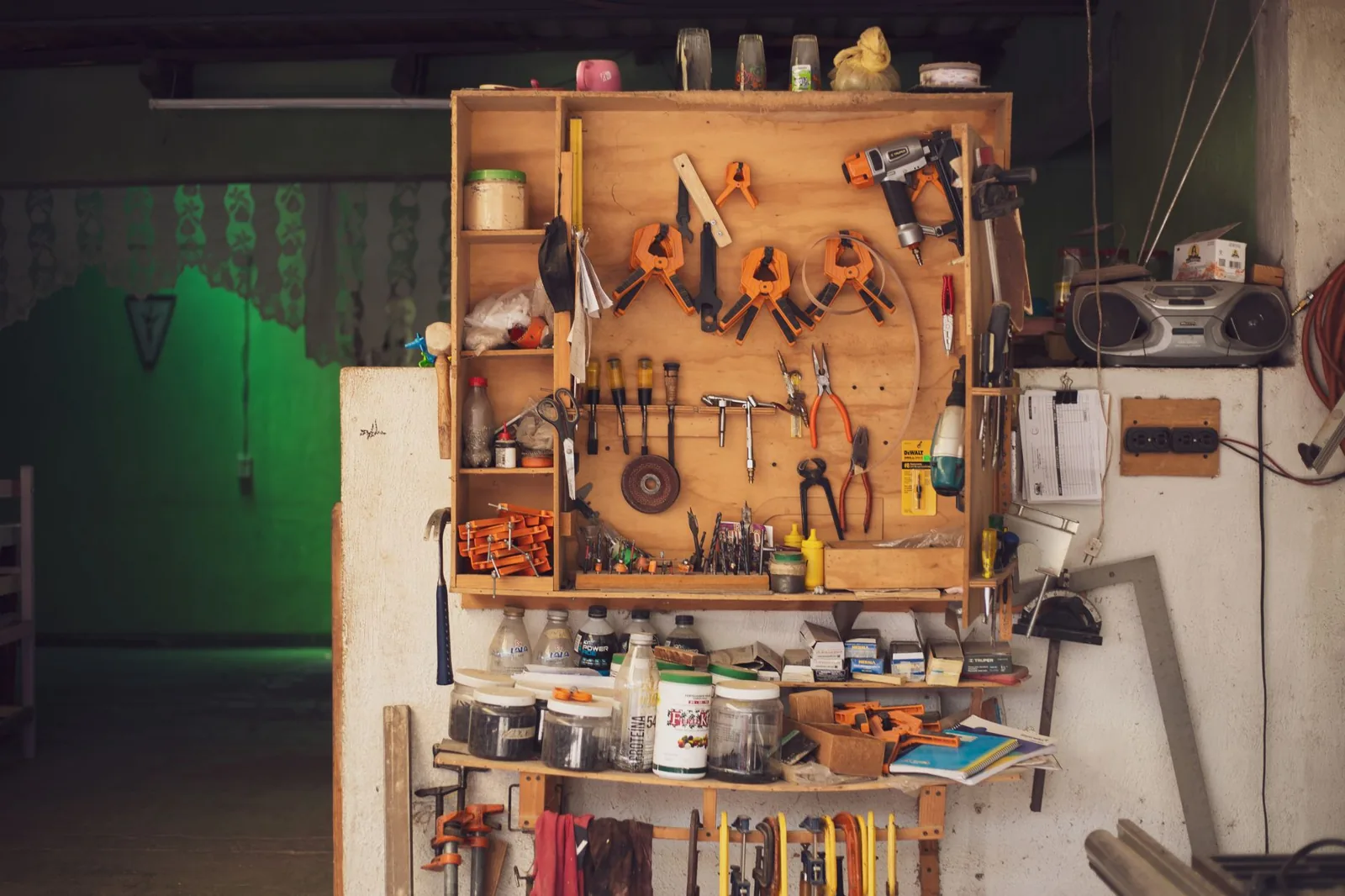
- Track rails are great for heavy tools, ladders, and yard gear. Because hooks slide along the rail, you can reshuffle the layout in minutes.
- Slatwall panels cost more upfront but hold more per square foot and look cleaner, which matters if your garage is visible from the street.
- French cleats are the DIY favorite: a 45-degree rip on scrap plywood creates a rail system for a fraction of the retail cost.
Pegboard and Simple Hooks
For a budget option, a sheet of tempered pegboard (about $25 for a 4-by-8 panel) plus a starter peg hook set handles hand tools, extension cords, and spray bottles without any special hardware. Screw it into furring strips so the pegs have room to seat, and keep heavy items on wall-mounted shelf brackets rather than pegs.
Whichever system you pick, anchor everything into studs. Drywall anchors will pull loose the first time you hang a 30-pound bin. If your garage is unfinished, this is also a natural moment to think about the walls themselves—insulating and finishing them makes the space more pleasant to work in and gives your wall storage a solid, clean surface to mount on.
Ceiling and Overhead Storage for Bulky Gear
The ceiling is the last frontier of garage storage, and it’s ideal for the stuff you need only occasionally: holiday bins, camping gear, luggage, and spare lumber. Overhead racks hold 250 to 600 pounds depending on the model, which keeps heavy, awkward items out of both your way and your car’s path.
Overhead racks from SafeRacks, Fleximounts, and Harken run about $80 to $300 for a 4-by-8-foot platform. Installation is a two-person job—you’re bolting into ceiling joists—but it’s a realistic Saturday project for a confident DIYer.
- Fixed overhead racks are the cheapest and sturdiest option but require a ladder to load and unload.
- Drop-down racks let you lower the whole platform to waist height; they cost more ($250 to $500) but are worth it if you store heavy or awkward bins.
- Bike hoists and kayak hoists use rope-and-pulley kits ($20 to $40 each) to pull single items up against the ceiling.
One rule of thumb: keep at least 7 feet of clearance under any overhead rack so you don’t clip your head or the car’s roof. If your garage already has a detached footprint with extra height, ceiling storage is an even easier win.
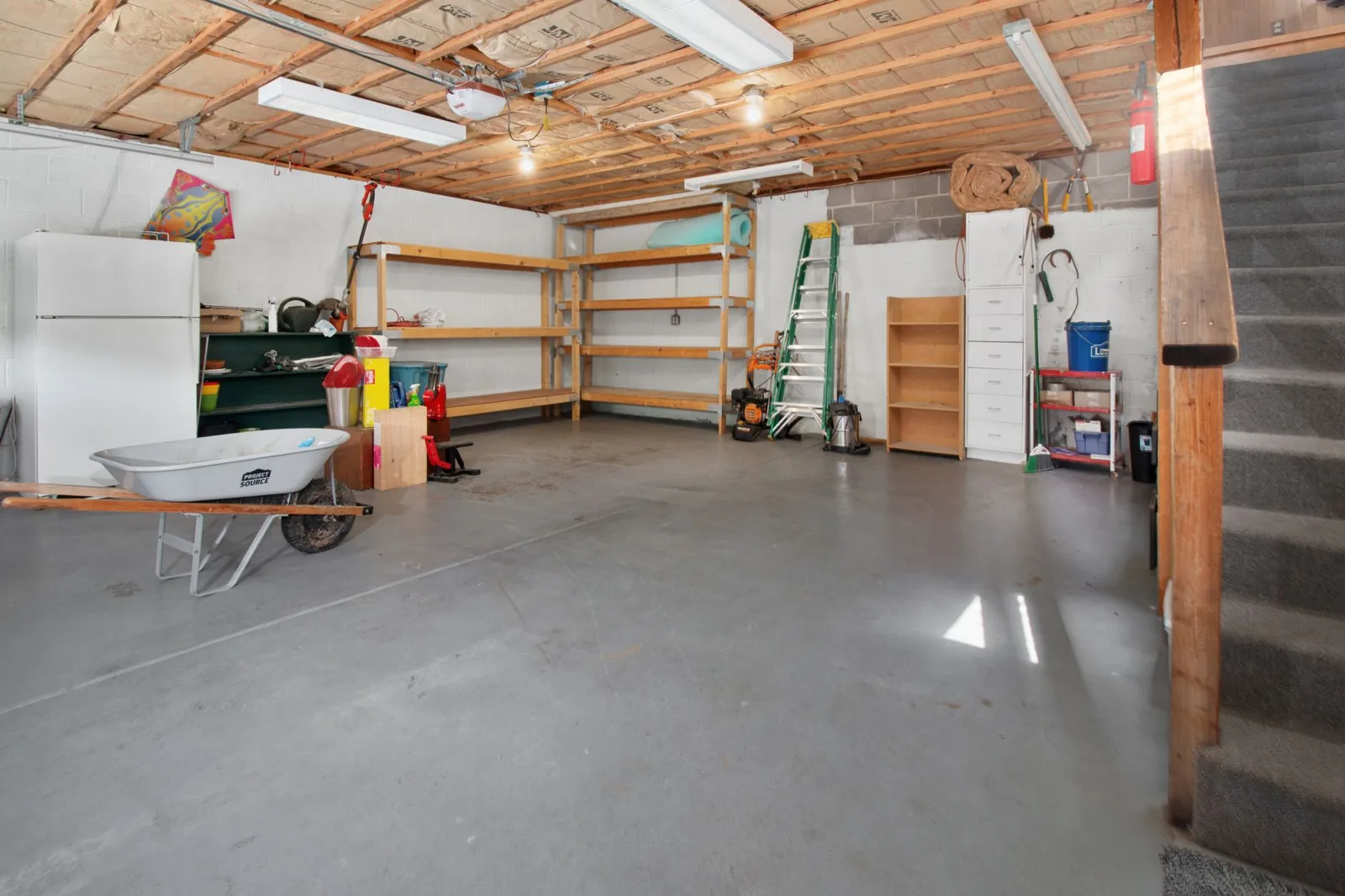
Photo by hi room via Pexels
Zone Your Garage Into Dedicated Areas
Zoning is the cheapest of all garage organizer ideas and the one people skip most often. The concept is simple: assign each wall or corner a job, and everything that belongs to that job lives there.
A practical four-zone layout for a two-car garage looks like this:
| Zone | What Lives Here | Recommended Storage |
|---|---|---|
| Garden zone | Mower, trimmer, fertilizer, hoses | Wall hooks, utility shelf, shed-style bin |
| Tool zone | Hand tools, power tools, hardware | Pegboard, tool chest, workbench |
| Sports zone | Bikes, balls, skis, camping gear | Bike hooks, ball caddy, overhead rack |
| Seasonal zone | Holiday decor, coolers, luggage | High shelving, ceiling rack |
Mark the zones with simple labels or a strip of painter’s tape on the wall so the whole household knows where things go back. The biggest cause of garage relapse isn’t a lack of storage—it’s family members not knowing where a thing belongs.
Shelving, Cabinets, and Workbenches
Once the walls and ceiling are doing their share, closed and freestanding storage finishes the job. The right mix depends on what you store and how tidy you want it to look.
Freestanding Shelving
Heavy-duty plastic or wire shelving (Husky, Gladiator, and HDX all make good units) costs $60 to $200 for a five-shelf rack and holds several hundred pounds. Plastic is the better choice in humid or coastal climates because it won’t rust. Put the heaviest items—paint cans, car batteries, bagged soil—on the lowest shelf for stability.
Cabinets
If your garage is visible from the kitchen or street, or if you store chemicals and want them behind locked doors, a cabinet set is worth the money. NewAge and Ulti-MATE steel cabinet sets run $300 to $1,500 for a full wall, but they transform the room’s look and keep dust off everything. A cheaper middle path is a used kitchen cabinet set, which installs just as well and costs a fraction of retail.
A Real Workbench
A workbench is a storage system in disguise: a 2-by-4-foot top with a lower shelf keeps a project contained and gives power tools a permanent home. Build one from a solid-core door and 2x4s for under $100, or buy a steel bench with a built-in vise for $200 to $400.
Seasonal and Sports Gear Storage
Sports and seasonal items are the hardest category to keep organized because they’re bulky, oddly shaped, and used in bursts. Dedicated hooks and racks solve this better than shelves ever will.
- Bikes: Wall-mounted bike hooks or a ceiling hoist free up floor space fast. A vertical floor rack holds two to five bikes for $50 to $150 if you’d rather not lift them.
- Balls and bats: A wire ball caddy ($25 to $40) corrals loose balls; a simple pegboard row handles bats, rackets, and helmets.
- Skis, boards, and fishing rods: Rubber-coated wall hooks hold all three without scratching, and they cost a few dollars each.
- Holiday decor: Clear, stackable bins with lids beat cardboard boxes every time. Label the end of each bin facing outward so you can read it from a ladder.
The pattern here is the same as everywhere else: get it off the floor, and group it by category rather than by “wherever it happened to land.”
Budget Organizer Ideas Under $100
You don’t need a $500 wall system to make real progress. A few hours and a trip to the home center will cover most of the ground these systems do, and you can always upgrade later.
- PVC pipe tool racks organize shovels, rakes, and brooms for under $15 in materials.
- Magnetic tool strips ($15 to $30) keep screwdrivers and wrenches visible and reachable.
- Mason-jar hardware storage screwed to the underside of a shelf holds screws, nails, and drill bits in clear view.
- Bungee-cord ball racks turn two wall anchors and a few cords into a sports-gear holder.
- Repurposed kitchen cabinets give you closed storage for the cost of screws and a coat of paint.
- Pegboard panels at $25 each cover a full wall of hand tools.
The fastest under-$100 win is simply installing a 2×4 cleat along one wall and hanging everything heavy from heavy-duty hooks. Total cost runs about $30, and it outperforms most retail hook kits.
Frequently Asked Questions
How much does it cost to organize a garage?
A basic DIY organization pass—decluttering, a pegboard wall, some shelving, and hooks—runs $100 to $300. A full setup with track wall systems, overhead racks, and cabinets typically lands between $1,000 and $3,000, with high-end steel cabinetry pushing higher.
What is the best way to organize a garage with no shelving?
Use the walls and ceiling first. Track rails, pegboard, hooks, and overhead racks create storage where none exists, and they don’t consume any floor space. This is the core of most garage organizer ideas that work in small or unfinished garages.
Can I install overhead garage storage myself?
Yes, if you’re comfortable finding and driving into ceiling joists and can lift the rack into place with a helper. Fixed racks are the easiest; drop-down racks have more moving parts but are still a one-day job for a confident DIYer.
How do I keep my garage from getting messy again?
Zone the space, label everything, and store items at the point where they’re used. The right garage door and a quick seasonal reset—one hour in spring and fall—will keep the clutter from creeping back onto the floor.
Is it better to use shelves or cabinets in a garage?
It depends on what you store and how visible the space is. Shelves are cheaper and better for large or frequently used items; cabinets hide clutter, keep dust and pests out, and look cleaner, which matters for attached garages visible from the house.
The Bottom Line
The garage is one of the few rooms where a single weekend of work can double its usable space. Start by purging what you don’t need, then push everything up onto the walls and ceiling with tracks, hooks, shelves, and racks. Zone the room so every item has a clear home, and resist the urge to buy a complete system before you know what you’re storing.
For most households, the smart sequence is: declutter first, install a track or pegboard wall second, add overhead storage for bulky seasonal gear third, and finish with shelves or cabinets only where closed storage is genuinely needed. Follow that order and you’ll spend a few hundred dollars instead of a few thousand—and you’ll still be able to park in your garage next winter. For more on maximizing the space you have, This Old House and The Family Handyman both publish deep, photo-heavy rundowns of garage storage layouts worth stealing from.