Garage Shelving Ideas: 15 Ways to Tame the Clutter
The average two-car garage holds far more than two cars. Between holiday decor, camping gear, power tools, and the lawn mower, the floor disappears fast, and the only thing parked in there is a pile of boxes. The fix is rarely more square footage—it’s better vertical space. These garage shelving ideas cover everything from free weekend builds to heavy-duty steel systems, so you can pick the setup that matches your budget, your wall type, and how much weight you actually need to carry.
Most garages have between 8 and 12 feet of unused air above the floor. Shelving turns that dead zone into real storage, and it usually costs far less than renting a unit or building an addition. Whether you want a quick fix under $100 or a full wall of commercial-grade racking, there is a workable option here. Let’s start with the cheap ones and work up.
Best Garage Shelving Ideas by Budget and Material
The right shelf for a garage is not the same as the right shelf for a closet. Garage shelves carry heavier, bigger, and dirtier items—think 5-gallon buckets of paint, cases of oil, and car parts—and they get exposed to temperature swings and dust. Here is how the main materials stack up.
| Feature | DIY Wood Shelves | Steel / Wire Racks | Wall-Mounted Systems |
|---|---|---|---|
| Typical cost | $40–$150 per wall | $80–$400 per unit | $60–$250 per wall |
| Weight capacity per shelf | 200–400 lb | 600–2,500 lb | 100–500 lb |
| Best for | Bulky, irregular items | Heavy tools, bulk stock | Lighter items, floor clearance |
| Skill level | Intermediate | None (bolt-together) | Basic stud-finding |
| Lifespan | 15–30 years | 20+ years | 15–30 years |
DIY Lumber-and-Bracket Shelves
If you own a circular saw and a drill, this is the cheapest durable route. Cut 2x4s into uprights and cross braces, then top each tier with 3/4-inch plywood or OSB. Anchor the uprights into wall studs every 16 inches with 3-inch screws, and keep shelf spans under 4 feet so they don’t sag. A four-tier, 8-foot-wide wall built this way runs about $120 in lumber and handles totes and small appliances without complaint.
Freestanding Steel and Wire Racks
For pure capacity, a bolt-together steel rack is hard to beat. Units from Husky, Gladiator, and Seville Classics carry 600 to 1,000 pounds per shelf, cost $80 to $250 depending on size, and need no wall at all—useful in a garage with drywall you’d rather not chew up. Wire shelves let dust fall through instead of collecting, which matters if you store anything with a motor.
Wall-Mounted Track Systems
Track-and-bracket systems like Rubbermaid FastTrack or Gladiator GearTrack give you the flexibility to rearrange shelves without re-drilling. You mount a horizontal rail into the studs, then clip shelves, hooks, and baskets anywhere along it. This is the strongest option for keeping the floor completely clear—ideal if you want to park the car and still store gear overhead. For a full wall of storage on a budget, pair a track system with the layout tips in our guide to garage organizer ideas.
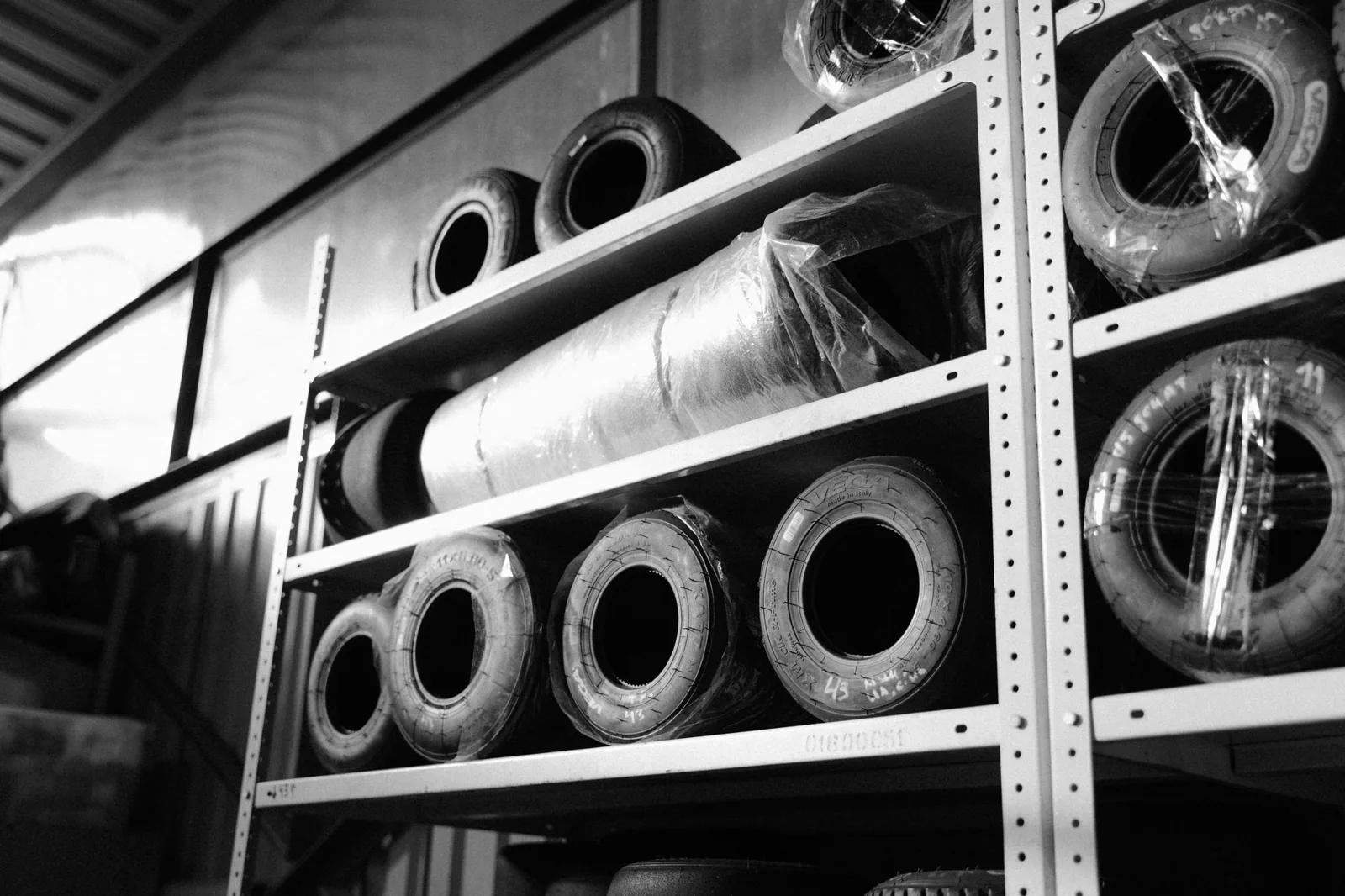
Photo by Tima Miroshnichenko via Pexels
Where to Put Shelves: Layout Rules That Actually Work
Placement matters as much as the shelf itself. A well-placed 12-inch shelf beats a poorly placed 24-inch shelf every time.
- Keep heavy items low. Store anything over 40 pounds—generators, bulk liquids, spare wheels—below waist height. It’s safer to lift and safer if a shelf ever fails.
- Reserve eye-level for daily-use items. Put the things you grab weekly (drill, chargers, gloves) at arm’s reach so you’re not dragging out a ladder for a screwdriver.
- Use the top shelf for seasonal, light bins. Holiday decor and empty luggage can live above your head if they’re under 20 pounds.
- Leave an 18-inch aisle. Walk-in shelving is only useful if you can reach it. Keep a clear path so the shelf doesn’t become a wall of junk you never touch.
- Mount above the car, not beside it. In a tight garage, overhead and high-wall shelves reclaim space the car already occupies.
Stud vs. Drywall: Don’t Skip This
A shelf holding 300 pounds anchored only into drywall will pull out of the wall—usually at 2 a.m. with a crash. Always screw wall-mounted brackets and rails into studs. If you can’t hit a stud where you want it, use toggle bolts rated for the load, or span a French cleat across two studs. For garages that are finished but uninsulated, adding insulation first makes the space more pleasant to work in; see our garage insulation guide before you close up any walls.
Photo by hi room via Pexels
Specialty Shelving for Awkward Garage Items
Standard shelves handle bins and boxes fine, but a few items need a custom touch.
Overhead Ceiling Shelves
Ceiling-mounted racks from SafeRacks, MonsterRax, and Fleximounts bolt to the ceiling joists and store 400 to 600 pounds above the car. They’re perfect for the long, flat, seasonal stuff: kayaks, ladders, snow tires, and camping bins. Expect to pay $120 to $350 and set aside an afternoon to install with a friend—the racks are heavy and awkward to lift solo.
Corner Shelving
Corners are wasted in most garages. A set of triangular or L-shaped shelves fills that dead space with a home for spray cans, paint brushes, and small parts. Pre-cut corner kits run $25 to $60, or you can cut your own from a single sheet of plywood for under $20.
Pegboard-Backed Shelves
Mount pegboard behind a workbench and top it with a shallow shelf. You get tool storage on the wall and a landing strip for screws, jars, and chargers on the shelf. It’s the cheapest way to make a garage feel like a proper shop.
How Much Weight Do You Really Need?
Overbuying is the most common shelving mistake. A shelf rated for 800 pounds does nothing for you if it costs three times more and you only ever store 50-pound totes. Do the math before you shop:
- A standard 27-gallon tote, full, weighs 40 to 60 pounds.
- Two totes side by side per shelf = roughly 120 pounds per tier.
- Four tiers = about 500 pounds of total load spread across the unit.
That means a mid-range rack rated 300 to 400 pounds per shelf is plenty for most households. You only need commercial-grade 1,000-pound shelving if you’re storing engines, bulk ammo, or dozens of cases of canned goods. Skip the rating race and buy for your real load, plus a 20% safety margin.
Freestanding vs. Attached: Which Is Right for You?
If you own the home and plan to stay, attached shelving costs less and holds more per dollar. If you rent or might move in a few years, freestanding racks go with you and leave no holes to patch. Renters should lean freestanding—most leases don’t love a wall full of lag bolts. Either way, anchoring any tall freestanding rack to the wall is cheap insurance against a tip-over, especially if kids are around.
Budget Breakdown: What Garage Shelving Costs
You can spend $40 or $4,000 on this project. Here’s what each tier buys.
- Under $100: DIY lumber shelves, one small wire rack, or a couple of wall-mounted brackets with MDF tops.
- $100–$300: A quality 4–5 tier steel or wire rack, a wall-mounted track kit, or a single overhead ceiling rack.
- $300–$800: A full wall of track shelving, multiple steel units, or an overhead rack plus wall storage combined.
- $800+: Custom built-in shelving, welded steel systems, or a professional install covering an entire bay.
For most two-car garages, $250 to $500 buys a complete, organized system you’ll still be using in 15 years. If you’re already improving the structure around the shelves—new drywall, a fresh floor, or a door that actually seals—factor those into your budget the same way you would a detached garage cost. For a fuller picture of getting the whole space under control, our garage organizer ideas guide covers bins, hooks, and zone planning beyond the shelves. For load ratings and bracket spacing, Family Handyman’s garage shelving guide details how to size the hardware to what you actually store.
Frequently Asked Questions
What is the best shelving for a garage?
For most homeowners, a steel or heavy-duty wire rack is the best overall choice. It’s strong enough for real garage loads, assembles in under an hour, and doesn’t need to be anchored to a wall. Wall-mounted track systems are better if clearing the floor is the goal.
How deep should garage shelves be?
Keep most garage shelves 12 to 18 inches deep. Anything deeper than 24 inches encourages items to get lost in the back and wastes floor space. Use 24-inch shelving only for large totes or bulk storage you access rarely.
Can I install garage shelves on drywall alone?
No. Shelves carrying real weight must anchor into studs or use load-rated toggles. Drywall alone will fail under heavy loads. If the wall is finished, locate studs with a stud finder and screw brackets directly into them.
Are DIY wood shelves strong enough for a garage?
Yes, when built correctly. A 2×4 frame topped with 3/4-inch plywood holds several hundred pounds per tier. The two rules are anchoring into studs and keeping spans under 4 feet so the plywood doesn’t sag over time.
How much does it cost to add shelving to a garage?
A basic DIY wall shelf costs $40 to $150 in materials. A full wall of steel or track shelving runs $250 to $500. Overhead ceiling racks add another $120 to $350 if you want above-car storage.
The Bottom Line
Garage shelving is one of the few home projects that pays for itself immediately. For a few hundred dollars and a weekend, you reclaim your floor, find what you own, and stop renting a storage unit for things that should have a home in your own garage. Match the shelf to the load, anchor into studs, keep heavy items low, and you’ll have a system that works for decades rather than a leaning pile that collapses in a year.
Ready to keep going? Check out our garage organizer ideas for more ways to sort the small stuff, and our guide to garage door installation cost if the door behind the shelves needs an upgrade too. A clean garage starts with a shelf—go build one.