Garden Shed Ideas: 15 Stylish and Practical Storage Solutions
A good garden shed is the rare backyard upgrade that pays for itself twice — once in storage and again in curb appeal. But with so many sizes, materials, and styles on the market, most homeowners stall out before they order anything. The key is matching the shed to what you actually need it to do, not to the prettiest photo in a catalog.
These garden shed ideas cover the full range: budget-friendly kits, custom builds, dual-purpose studios, and small-space options under 100 square feet. Each one includes realistic cost figures and sizing guidance so you can compare them against your own yard and budget.
How to Choose the Right Shed Size
Size is the first decision, and it’s the one homeowners get wrong most often. A shed that feels roomy on delivery day is cramped within a season once the mower, wheelbarrow, and holiday bins move in.
Use this as a starting point:
- 6 x 4 ft (24 sq ft): Hand tools, a push mower, and a couple of bins. Good for tight yards and side returns.
- 8 x 6 ft (48 sq ft): A mower, trimmer, ladder, and shelving along one wall. The most common starter size.
- 10 x 8 ft (80 sq ft): Room for a riding mower or a workbench plus wall storage.
- 10 x 12 ft (120 sq ft): A workshop, potting bench, or bikes-and-garden-gear combo.
- 12 x 16 ft (192 sq ft) and up: A full workshop, studio, or storage-plus-hobby space.
A practical rule of thumb: buy 25% more floor space than you think you need. Vertical storage helps, but you still have to stand somewhere.
15 Garden Shed Ideas Worth Considering
1. The Classic Gable Wood Shed
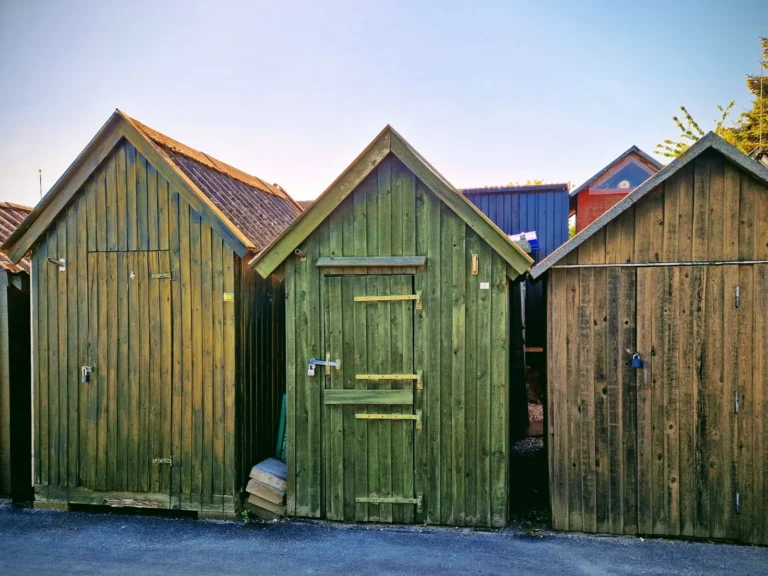
A wood shed with a pitched gable roof is the default for good reason. It reads as permanent, takes shingles or metal roofing easily, and can be painted to match the house. Expect to pay $2,000–$4,500 for an 8 x 10 pre-built cedar or pine model, or $1,200–$2,000 for a kit you assemble yourself. Wood needs annual maintenance — stain or paint every two to three years — but it’s the easiest material to modify later.
2. The Metal Utility Shed
Galvanized steel and aluminum sheds from brands like Arrow, Duramax, and Lifetime cost $300–$1,800 for common 8 x 6 to 10 x 12 sizes. They’re fire-resistant, rot-proof, and nearly maintenance-free. The trade-off is looks and comfort: steel sheds condense moisture in humid climates and get hot in direct sun, so they’re best for tools rather than anything temperature-sensitive.
3. The Resin (Vinyl) Shed
Resin sheds — molded high-density polyethylene from Keter, Suncast, or Lifetime — cost $800–$3,500. They never rust, rot, or need painting, and most snap together in a weekend. They’re the lowest-effort option on this list. The catch is that colors are limited (mostly tan, gray, and brown) and they’re hard to modify after the fact.
4. The Garden Office or Studio
Turning a shed into a workspace is one of the fastest-growing garden shed ideas. A finished 10 x 12 studio with insulation, drywall, electrical, and a mini-split can run $15,000–$30,000 installed. At the budget end, a pre-built “office shed” shell from a company like Studio Shed or Tuff Shed starts around $8,000–$12,000 before you wire it. Check local rules first — a structure with electricity usually needs a permit.
5. The Potting Shed
A potting shed puts the workbench front and center. You’ll want a deep counter, a utility sink if you can plumb it, and a window for light. Skip the sink and a simple 8 x 8 potting shed can be built for $3,000–$6,000 in materials. Add a greenhouse-style polycarbonate roof and you’ve got a seed-starting station in spring.
6. The Lean-To or Wall-Mounted Shed
For narrow side yards, a lean-to shed tucked against a fence or house wall squeezes storage into space too small for a freestanding building. Kits in the 4 x 8 to 6 x 10 range cost $400–$1,500. Just keep the roofline below fence height and check setback rules before you build against a property line.
7. The Barn-Style (Gambrel) Shed
A gambrel roof adds a full second tier of storage — perfect for hay, bins, or seasonal decorations — without a bigger footprint. A 10 x 12 barn shed runs $3,000–$7,000 pre-built or $1,500–$3,500 as a kit. If you’re buying for looks alone, the loft overhead is a genuine bonus, not just a gimmick.
8. The Bike Shed
A purpose-built bike shed (roughly 4 x 8 ft) with a wide door and interior hooks keeps two to four bikes dry and easy to roll out. Horizontal wood “shiplap” models start around $600–$1,200. If theft is a concern, bolt the shed to a concrete pad and add a hardened hasp — the building itself is the cheap part.
9. The Tool Corral
Not every yard needs a walk-in building. A 3 x 5 or 4 x 4 horizontal tool shed — essentially a deep cabinet — stores mowers, rakes, and gas cans for $200–$600. It’s the right answer when your main problem is clutter on the patio, not a lack of square footage.
10. The Shepherd’s Hut or Cabin Shed
For a statement piece, a small cabin-style shed with a porch, painted trim, and a metal roof starts around $4,000–$8,000 for an 8 x 10 kit. These lean decorative, but they hold their value and are genuinely pleasant to spend time in — which matters if it doubles as a reading nook or guest overflow.
11. The Greenhouse Combo
Split a 10 x 12 building into a storage half and a glazed growing half, and you get a greenhouse without sacrificing tool storage. Budget $5,000–$12,000 depending on glazing quality. Polycarbonate panels are the value play; tempered glass looks better but costs more and needs a sturdier frame.
12. The Firewood Shed
A simple three-sided firewood shed with a sloped roof — open front, air-gapped slats — costs $300–$900 to build and holds one to two cords. It’s the cheapest item on this list and one of the most functional: dry, seasoned firewood burns cleaner and lights faster.
13. The Playhouse-Turned-Storage
Repurposing a kid’s playhouse as a garden shed is a smart recycling move once the swing set era ends. Reinforce the floor, add a hasp lock, and you’ve got weatherproof storage for $0 beyond materials you already own. Just be realistic about headroom — most playhouses are built for six-year-olds.
14. The Saltbox Shed
A saltbox roof (one long slope, one short) sheds snow and rain better than a flat gable and gives a shed a New England look that suits cottage-style homes. Expect $2,500–$6,000 for a 10 x 12 kit or pre-built model. The asymmetrical roof also buys a little extra headroom on one wall for shelving.
15. The DIY Pallet Shed
If budget is the constraint, a pallet-wood shed on a gravel pad can be built for $200–$500 in fasteners, roofing, and paint — assuming you can source free pallets. It won’t last like a kit, but for a season or three of tool storage, it’s hard to beat the price.
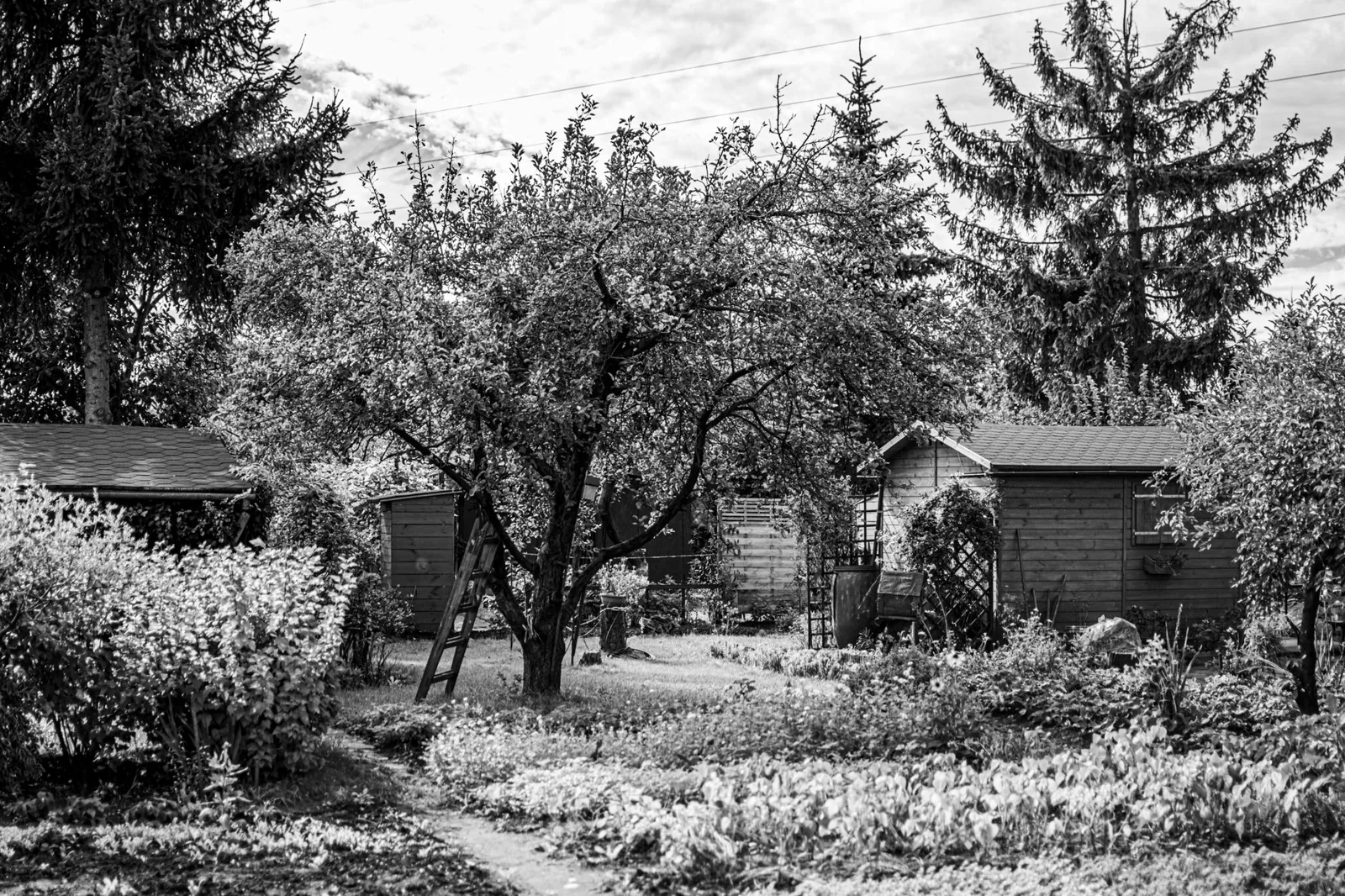
Photo by SHOX ART via Pexels
Material and Cost Comparison
| Feature | Wood Shed | Metal Shed | Resin Shed |
|---|---|---|---|
| Typical 8 x 10 cost | $1,200–$4,500 | $400–$1,200 | $800–$2,500 |
| Lifespan (maintained) | 20–30 years | 15–25 years | 15–20 years |
| Maintenance | Paint/stain every 2–3 years | None | None |
| Ease of assembly | Moderate | Moderate | Easiest |
| Customization | Excellent | Poor | Poor |
| Best for | Looks, workshops | Budget, tools | Low-effort storage |
If you want a more detailed breakdown of how size drives the final number, see our guide to shed cost by size.
What to Do Before You Build
A shed is a structure, not furniture. A few checks up front prevent expensive surprises later.
- Setbacks and permits: Most areas allow a small shed (under 100–120 sq ft) without a permit, but you still have to respect property-line setbacks — commonly 3 to 5 feet. Call your local building department or check online before you pour anything.
- HOA rules: If you’re in an HOA, read the covenants. Some restrict shed height, materials, and color, and a few ban them outright.
- Foundation: A shed on bare ground rots or rusts. A gravel pad ($200–$600) is fine for most kits; a concrete slab ($800–$2,000 for 8 x 10) is the best choice for heavier wood buildings and workshops.
- Access and grading: Make sure you can actually get the shed (or its panels) into the yard, and build on the high side of any drainage path.
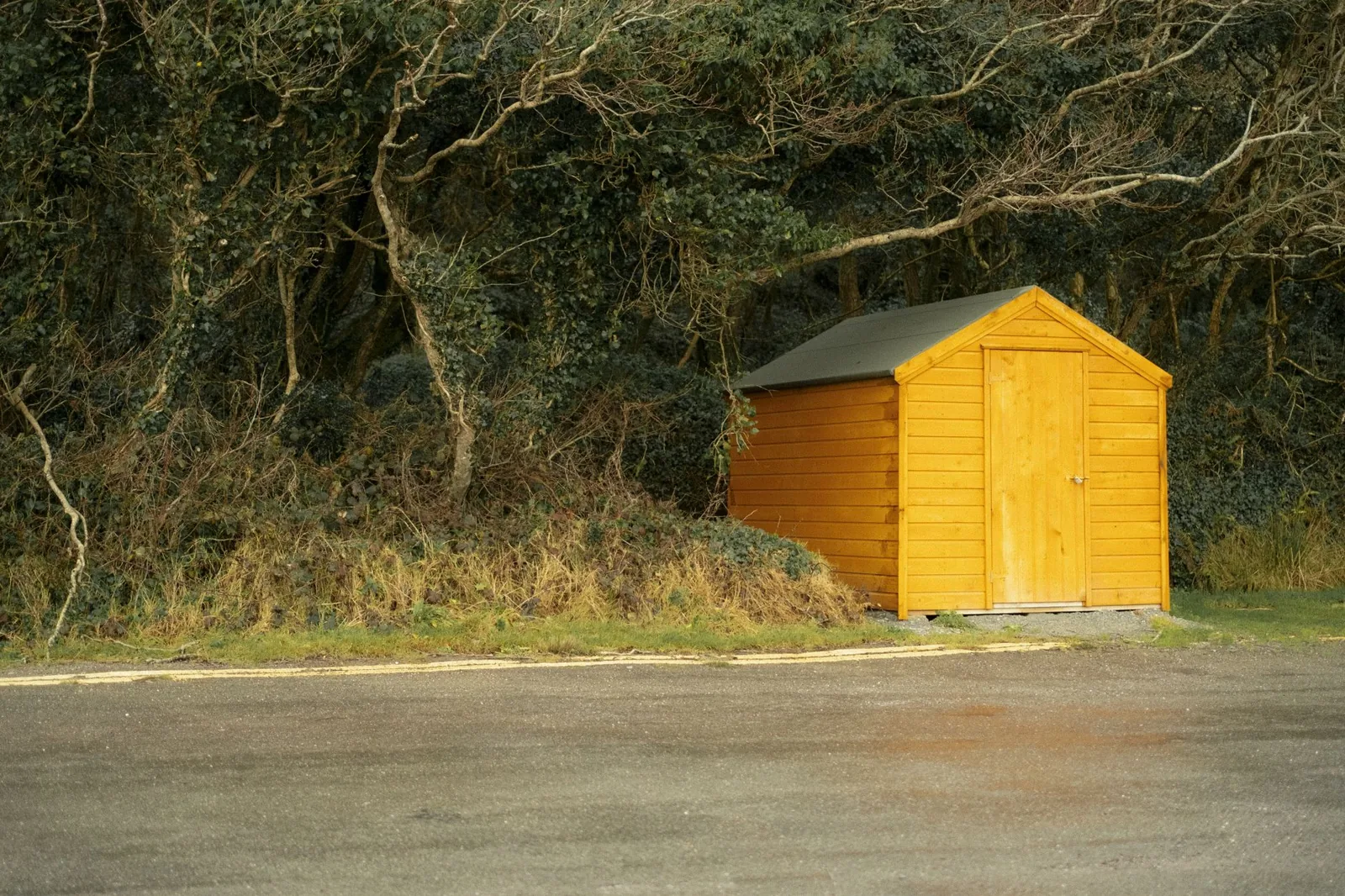
Photo by atelierbyvineeth . . . via Pexels
Frequently Asked Questions
Do I need a permit for a garden shed?
In most US municipalities, sheds under 100 to 120 square feet don’t need a building permit, but setback requirements still apply. Larger sheds, or any shed with electricity or plumbing, usually do need a permit. Always confirm with your local building department rather than assuming.
How much does a garden shed cost?
A basic 8 x 6 metal or resin shed runs $300–$1,000; a wood kit is $1,200–$2,500; and a pre-built wood shed with installation is $2,000–$7,000. Finished studios and offices start around $15,000 once electrical and insulation are included.
What’s the best material for a garden shed?
Wood is best if you want looks and the ability to modify it. Resin is best for zero maintenance. Metal is best for tight budgets and fire-prone areas. Your climate and how much you’ll use the shed matter more than any single “best” label.
Does a garden shed add home value?
A well-kept, matched-to-the-house shed adds modest value and is a strong selling point, but it won’t return anywhere near its full cost at resale. Buy it for function and curb appeal, not as an investment property. If storage is the real goal, garage organizer ideas may stretch your existing space further for less money.
Can I turn a shed into a workspace?
Yes, but it changes the rules. Insulating, drywalling, and adding electrical to a shed usually triggers permit requirements and may reclassify it as a habitable or accessory structure. Budget $5,000–$15,000 on top of the shell for a comfortable year-round workspace, and keep an eye on temperature and humidity — a properly insulated shed also needs ventilation, which ties into the same principles covered in our garage insulation guide.
The Bottom Line
The right garden shed idea is the one that matches your yard, your budget, and your tolerance for maintenance. If you want it done in a weekend with no upkeep, buy resin. If you want a building that looks like part of the house, go wood and maintain it. If storage is the only goal, a metal kit or even a tool corral gets the job done for a few hundred dollars.
Measure twice, check your local rules, and buy 25% more space than you think you need — that’s the difference between a shed you use for a decade and one you outgrow in a year. For more on outdoor structures and storage, see our guide to garage door installation costs and our carport ideas for your home.
Sources: The Family Handyman — Shed Buying Guide, This Old House — How to Build a Shed